Timeline | Description |
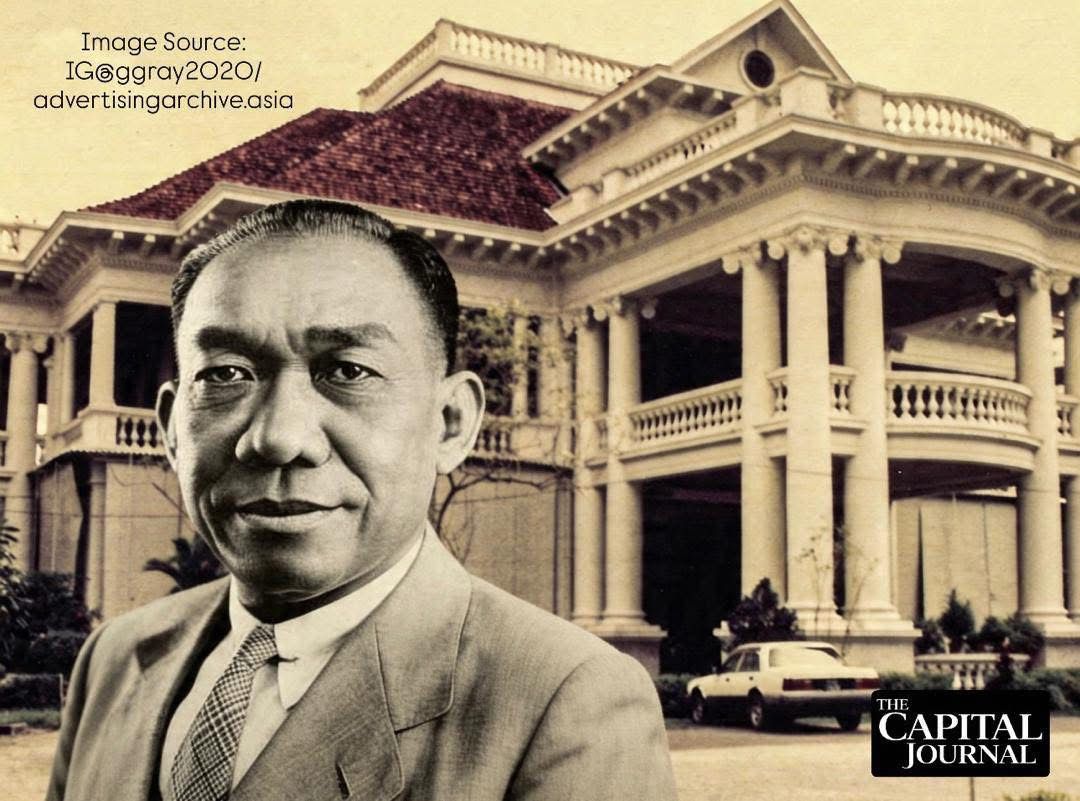
1899 to 1929 | Chua Cheng Bok builds wealth through Cycle and Carriage and constructs Bok House. |
1939 to 1960s | Economic downturn and war disrupt operations, while Bok House remains a private family residence. |
1969 to 2006 | Property transitions into commercial use before eventual demolition despite heritage recognition efforts. |
2012 to 2017 | Tropicana Corporation redevelops the site into a mixed use project anchored by W Kuala Lumpur. |
2023 | IOI Properties Group acquires the hotel, marking another shift in ownership. |
Context
Today, W Kuala Lumpur stands as one of the city’s most visible lifestyle landmarks, particularly its WET Deck overlooking the Petronas Twin Towers. The venue represents a convergence of luxury, social currency, and urban consumption.
Yet beneath its modern façade lies a site shaped by more than a century of commercial ambition, family legacy, and shifting capital priorities. Its transformation reflects broader patterns in Malaysia’s urban evolution, where heritage and development often compete for the same space.
Deep Dive
In 1899, Chua Cheng Bok co founded Cycle and Carriage in Kuala Lumpur, initially trading bicycles before expanding into automobiles as demand for mechanised transport grew. The company rapidly scaled alongside the rubber boom, establishing branches across key cities and becoming a dominant automotive distributor in the region.
In 1926, Cycle and Carriage was incorporated as a public company in Singapore, with Chua as chairman. During this period, the company expanded its portfolio of international automotive brands through acquisitions, strengthening its position in Southeast Asia. In the same year, Chua commissioned the construction of Bok House along Jalan Ampang, reflecting both personal wealth and corporate success.
In 1929, Bok House was completed after three years of construction. The residence featured a blend of Western architectural design and local elements, with interiors fitted with Italian marble, European artwork, and antique furnishings. Beyond serving as a private home, it symbolised the peak of the family’s economic standing. During the Japanese occupation, the property was repurposed for institutional use, reflecting the broader political upheaval of the era.
In 1939, global economic pressures impacted Cycle and Carriage, forcing the closure of multiple showrooms. In 1940, Chua passed away, leaving behind a substantial business legacy. The residence continued to be occupied by his family for several decades, maintaining its role as a private estate despite external changes.
In 1951, Cycle and Carriage secured the distributorship for Mercedes-Benz, a move that reinforced its position in the luxury automotive segment. This partnership became a long term pillar of the company’s growth, contributing to sustained capital accumulation across generations.
In 1969, the company was listed on stock exchanges in Malaysia and Singapore, formalising its capital structure. During this period, Bok House transitioned into Le Coq d’Or, a high end French restaurant that operated for over four decades, becoming a prominent social venue within Kuala Lumpur’s elite circles.
In 1982, the property was recognised for its heritage value, with authorities acknowledging its historical significance. However, conflicting ownership structures and evolving policy priorities created uncertainty over its long term preservation.
In 2006, despite efforts by heritage organisations such as Badan Warisan Malaysia, Bok House was demolished following regulatory approval. The decision marked a turning point in Malaysia’s heritage conservation narrative, as a historically significant structure was removed in favour of future development. The site remained vacant for several years thereafter.
In 2012, Tropicana Corporation initiated redevelopment of the 1.28 acre site into a mixed use project. The development introduced the W Kuala Lumpur brand under Marriott International, aligning the project with global luxury hospitality standards.
In 2017, W Kuala Lumpur officially opened, featuring a 25 storey structure with 150 rooms. Its rooftop WET Deck quickly became one of the city’s most recognisable lifestyle destinations, driven by its direct view of the Petronas Twin Towers and curated social environment.
In 2023, ownership of the hotel shifted when IOI Properties Group acquired the asset for RM270 million through its subsidiaries. The transaction allowed Tropicana Corporation to monetise its investment and optimise its balance sheet, while enabling IOI to expand its presence within Kuala Lumpur’s prime property segment.
Key Takeaway
The evolution of W Kuala Lumpur illustrates how urban land continuously transitions between legacy, commerce, and capital, often at the cost of historical continuity but in pursuit of economic reinvention.
FAQs
1. What stood on the site before W Kuala Lumpur?
Bok House, a historic mansion built by Chua Cheng Bok, once occupied the site.
2. Why was Bok House demolished?
Despite heritage recognition, policy shifts and development priorities led to its demolition in 2006.
3. Who developed W Kuala Lumpur?
Tropicana Corporation led the redevelopment, partnering with Marriott International for branding.
4. Who owns the hotel כיום?
IOI Properties Group acquired W Kuala Lumpur in 2023.
5. Why is the location significant?
It sits in a prime area facing the Petronas Twin Towers, making it a key lifestyle and tourism destination.