Summary
| Timeline | Description |
|---|---|
| 1996 | In 1996, Tan Sri Liew took control of SP Setia and began a land accumulation strategy that produced landmark township projects. |
| 2011 | In 2011, Permodalan Nasional Bhd launched a takeover of SP Setia, offering RM3.90 per share and soon holding a significant stake. |
| 2012 | In 2012, Permodalan Nasional Bhd increased its stake to a controlling 78.95%, cementing a change in ownership. |
| 2013 | In 2013, EcoWorld Development Group acquired Focal Aims, signalling the emergence of a new vehicle tied to Tan Sri Liews family. |
| 2014 | In 2014, Tan Sri Liew left SP Setia and EcoWorld purchased two township sites in Iskandar Malaysia totalling 1,288 acres for RM1.58 billion. |
| 2016 | In 2016, EcoWorld International was listed and EcoWorld entered the Bukit Bintang City Centre joint development with UDA Holdings and the Employees Provident Fund. |
| 2020 | In 2020, EcoWorld was included in FTSE4Good Bursa Malaysia, reflecting upgraded governance and sustainability credentials. |
| 2022 | In 2022, LaLaport at Bukit Bintang City Centre opened, marking EcoWorlds return to prime commercial development. |
| 2024 | In 2024, EcoWorld acquired 123 acres for a QUANTUM data centre, signalling a strategic pivot to digital infrastructure. |
Context
In the span of two decades, Tan Sri Liew transitioned from an executive who rebuilt an established developer into the architect of a new national contender. SP Setia was the platform where he proved a land centric and green oriented development model. EcoWorld Development Group became the vessel for a second ascent, driven by aggressive land accumulation, large scale capital transactions and a shift into mixed use and technology aligned assets.
Deep Dive
In 1996, Tan Sri Liew assumed leadership at SP Setia and redirected its strategy towards strategic land reserves. He combined township scale planning with an emphasis on integrated landscaping, which lifted residential standards and accelerated the companys market capitalisation over the following decade.
In 2011, Permodalan Nasional Bhd moved to acquire SP Setia, offering RM3.90 per share and leveraging a rising shareholding to press a takeover. Management sought white knights and countermeasures, but the institutional weight of the investor narrowed available options and set in motion a transfer of control.
In 2012, the stake held by Permodalan Nasional Bhd rose to 78.95% and control shifted away from the founding management cohort. Tan Sri Liew agreed to remain as president through 2014 to ensure continuity, but the governance centre had clearly migrated.
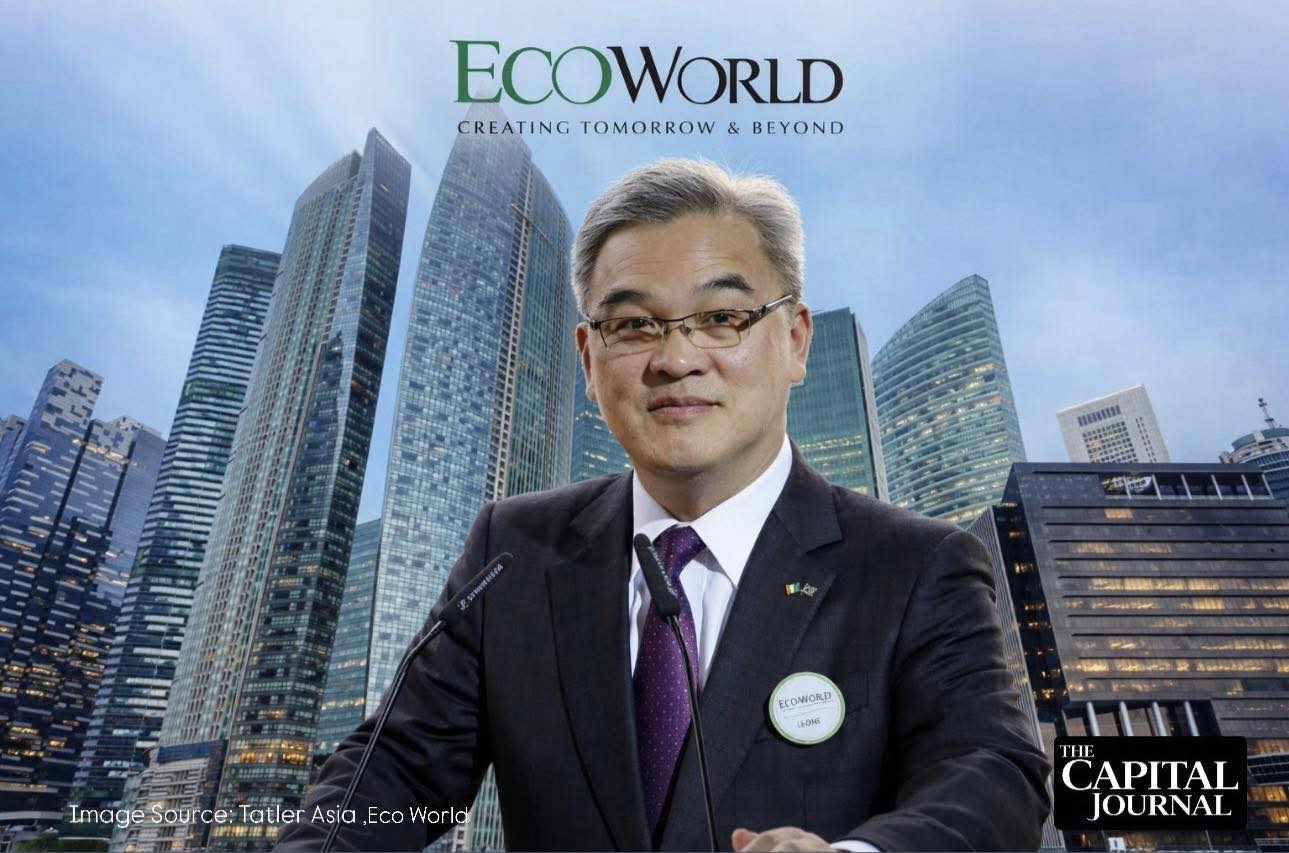
In 2013, EcoWorld Development Group led by Tan Sri Liews eldest son acquired Focal Aims and rebranded it as Eco World, signalling the practical start of a parallel platform that would inherit the familys development ambitions. The acquisition provided a listed vehicle ready for rapid scale up.
In 2014, after stepping down from SP Setia, Tan Sri Liew and his team executed immediate large scale land purchases in Iskandar Malaysia from DRB-HICOM and Tradewinds. The 1,288 acre deal worth RM1.58 billion established EcoWorld as a national tier developer from day one.
In 2014, later that year, EcoWorld undertook a bold capital restructure that included asset injections, a new share issue and placement. The manoeuvre raised RM1.78 billion in equity but diluted the founding familys stake from roughly 35% to around 11%, exchanging ownership for scale.
In 2016, EcoWorld International was listed to ringfence overseas operations and EcoWorld entered the Bukit Bintang City Centre joint venture with UDA Holdings and the Employees Provident Fund. The BBCC project, featuring a LaLaport mall developed with Mitsui Fudosan, marked a return to core urban commercial development.
In 2020, EcoWorlds inclusion in FTSE4Good Bursa Malaysia signalled that its governance and sustainability practices met internationally recognised benchmarks. The company continued to diversify its portfolio across residential, commercial and industrial product lines.
In 2022, the opening of LaLaport at Bukit Bintang City Centre validated EcoWorlds capacity to execute complex, large scale urban projects in highly competitive locations. The project reinforced the groups integrated development and retail management capabilities.
In 2024, EcoWorld acquired 123 acres for a QUANTUM data centre project in Johor, committing RM178.2 million to position the group in digital infrastructure. The move aligned land assets with demand for compute capacity and marks a strategic shift towards technology oriented real estate.
Key Takeaway
EcoWorlds trajectory shows a deliberate trade off of ownership for scale, with a succession of decisive capital and land moves that transformed a family controlled enterprise into a national developer with a diversified and future oriented asset mix.
FAQs
1. Who is Tan Sri Liew?
Tan Sri Liew is the developer who led SP Setia through a period of rapid township expansion and later founded EcoWorld Development Group as a second major platform.
2. What happened to SP Setia?
SP Setia experienced a change in control after Permodalan Nasional Bhd increased its stake to a controlling level, prompting leadership transition in 2014.
3. How did EcoWorld grow so quickly?
EcoWorld grew through large scale land acquisitions, asset injections and equity raises that prioritised immediate scale and GDV expansion over retention of founding ownership.
4. What is Bukit Bintang City Centre?
Bukit Bintang City Centre is a mixed use development in central Kuala Lumpur that includes retail, offices and residences, developed by EcoWorld in partnership with UDA Holdings and the Employees Provident Fund.
5. Why is the QUANTUM data centre important?
The QUANTUM data centre represents a strategic pivot into digital infrastructure, aligning EcoWorlds land holdings with long term demand for compute capacity and technology enabled real estate.