| Timeline | Description |
| 1981 | KSL Holdings Berhad was founded in Segamat, Johor by Tan Sri Khoo Cheng Hai @ Ku Cheng Hai and his brothers after years in the construction industry. |
| 1982 | The group formally entered property development and focused heavily on Johor rather than Kuala Lumpur, accumulating large tracts of freehold land at low cost. |
| 1997 to 1998 | During the Asian Financial Crisis, KSL expanded aggressively into Skudai and Gelang Patah, launching several township projects amid weak market conditions. |
| 2002 | KSL was listed on the Bursa Malaysia Main Market and launched the 700 acre Taman Bestari Indah township in Ulu Tiram. |
| 2004 | The company introduced Taman Nusa Bestari in Skudai, continuing its integrated township development strategy. |
| 2010 | KSL City Mall officially opened in Johor Bahru, transforming the group into a developer with strong recurring income streams. |
| 2012 onwards | KSL expanded into Selangor while strengthening its commercial and industrial property portfolio through integrated developments. |
| 2024 | The group’s landbank expanded to 4,946 acres, with most of its holdings concentrated in Johor at historically low acquisition costs. |
| 2026 | KSL launched Riveria Garden, a 1,026 acre township in Iskandar Puteri with an estimated gross development value exceeding RM15 billion. |
Deep Dive
In 1981, KSL Holdings Berhad was established in Segamat, Johor by Tan Sri Khoo @ Ku Cheng Hai together with his brothers Ku Hwa Seng and Ku Tien Sek. Before venturing into property development, the three brothers had spent years in the construction contracting business, where they developed a strong understanding of project execution and cost management. This operational discipline later became one of the group’s defining competitive advantages.
In 1982, KSL formally entered the property development sector. Instead of competing immediately in Kuala Lumpur’s crowded property market, the group chose to focus almost entirely on Johor, particularly the Johor Bahru surrounding regions. The strategy allowed the company to accumulate large freehold landbanks at relatively low prices long before property valuations surged.
From 1982 to the mid 1990s, the group quietly expanded its land holdings across Johor using a long term land banking strategy. Management believed that controlling low cost land would ultimately provide greater pricing flexibility and stronger margins during future development cycles. This patient approach later became the foundation of KSL’s rise into one of Johor’s dominant property developers.
In 1997, the Asian Financial Crisis devastated Southeast Asian economies and severely weakened Malaysia’s property market. While many developers retreated, the Ku brothers moved aggressively in the opposite direction. They identified long term growth potential in southern Johor and expanded into Skudai and Gelang Patah.
In 1998, KSL launched projects including Taman Damai, Pekan Nenas and Taman Nusa Perintis despite challenging economic conditions. The willingness to expand during a downturn reflected the group’s confidence in Johor’s future urbanisation potential. More importantly, it enabled the company to secure strategic land positions at depressed valuations.
In 2002, KSL achieved a major milestone when it was listed on the Bursa Malaysia Main Market. During the same year, the company launched Taman Bestari Indah in Ulu Tiram, a massive 700 acre township project comprising more than 10,000 planned units. The development demonstrated the group’s growing capability in managing large scale township planning and long term capital deployment.
In 2004, the company expanded further with the launch of the 227 acre Taman Nusa Bestari project in Skudai. KSL’s core development formula involved transforming previously underdeveloped areas into self sustaining residential and commercial ecosystems. By simultaneously developing homes, retail areas and supporting infrastructure, the company effectively created upward pressure on surrounding land values.
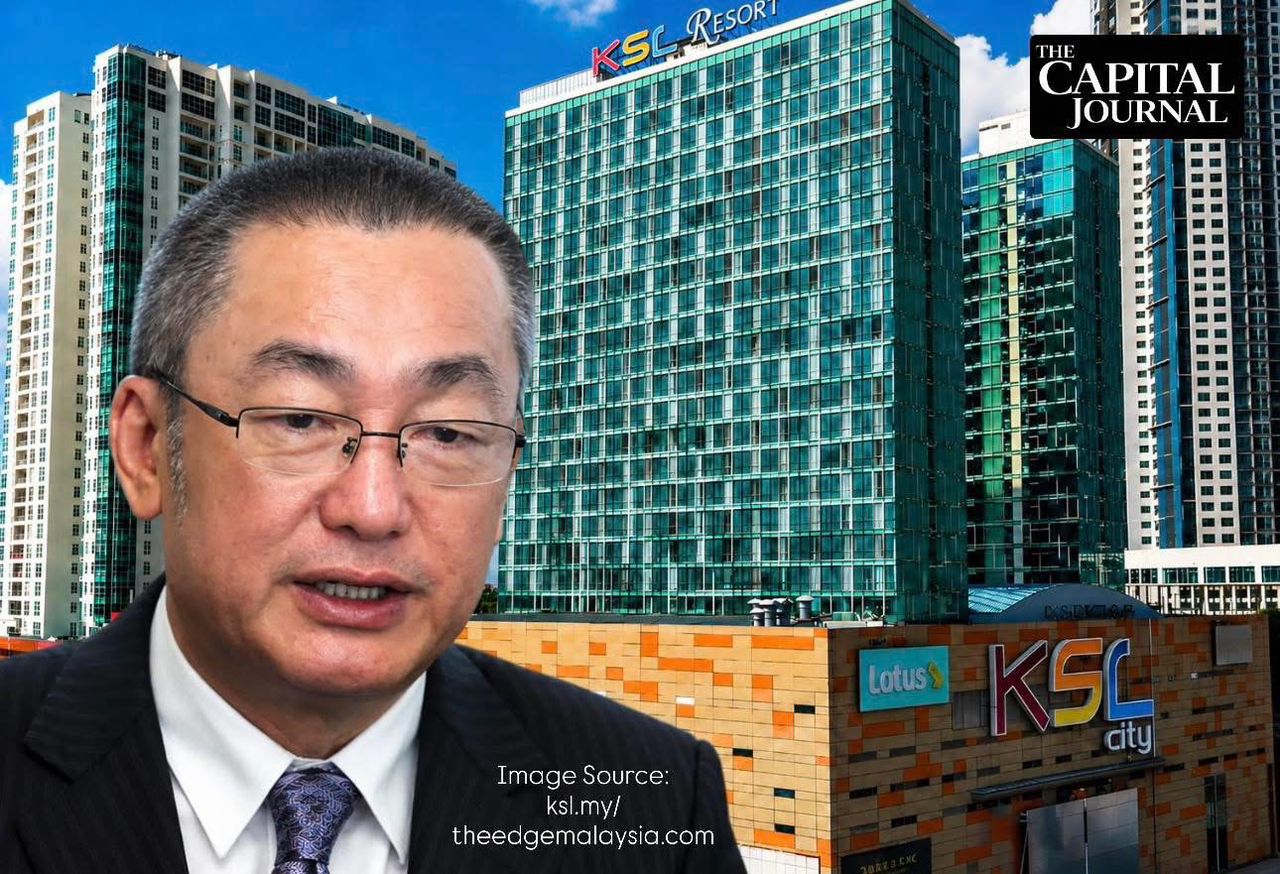
In 2010, KSL reached one of the most significant turning points in its corporate history with the official opening of KSL City Mall in Taman Abad, Johor Bahru. The integrated development included approximately 450,000 square feet of net lettable retail space, the 868 room KSL Hotel and Resort, and the D’Esplanade Residence serviced apartments. The project fundamentally reshaped Johor Bahru’s retail and tourism landscape.
In 2010, international fund manager Tan Sri Mark Mobius through Franklin Templeton acquired a 5% stake in KSL. The investment signalled growing institutional recognition of the company’s long term value proposition. KSL had by then evolved beyond a traditional residential developer into a property group supported by meaningful recurring income streams from retail leasing and hospitality operations. Today, recurring income businesses contribute around 20% of group earnings.
From 2012 onwards, KSL expanded into Selangor with the launch of the 448 acre Taman Bandar Bestari project in Klang. The company also developed KSL Esplanade Mall, which added approximately 650,000 square feet of lettable retail space to its commercial portfolio.
From 2015 onwards, the group intensified efforts to diversify into commercial and industrial developments. Projects such as KSL Business Park and KOJI Business Park reflected management’s strategy of integrating industrial activity with surrounding residential growth. By attracting businesses and employment opportunities, KSL aimed to stimulate long term appreciation in nearby housing demand and land values.
In 2024, KSL’s total landbank expanded to approximately 4,946 acres, with around 93% located in Johor. According to research by Affin Hwang Investment Bank, the company’s historical land acquisition costs averaged only between RM3 and RM6 per square foot. Even strategic acquisitions of distressed land assets completed in 2024 were secured at around RM30 per square foot, substantially below prevailing market valuations of approximately RM65 per square foot.
In 2025, the Ku family continued to maintain tight control over the company with combined ownership exceeding 60%. Members of the second generation had also entered senior management positions, ensuring continuity in strategic direction and corporate culture.
In early 2026, KSL demonstrated strong financial discipline despite rising development activity. While borrowings increased alongside project expansion, the group remained comfortably below its internally imposed gearing threshold of 0.7 times and continued to maintain a net cash position.
As of the fourth quarter of 2025, KSL’s total borrowings stood at approximately RM1.36 billion against total assets of RM6.06 billion. The relatively conservative balance sheet provided the group with stronger resilience against interest rate volatility compared with many industry peers.
In 2026, KSL announced the launch of Riveria Garden, the largest flagship project in the group’s history. The 1,026 acre integrated township located in Iskandar Puteri carries an estimated gross development value exceeding RM15 billion. Positioned within the Johor Singapore Special Economic Zone corridor, the project is expected to serve as KSL’s primary long term growth engine over the next two decades.
Key Takeaway
The story of KSL Holdings Berhad reflects one of Malaysia’s clearest examples of disciplined land value investing. By acquiring strategic land during weak market cycles and unlocking value during favourable policy and infrastructure periods, the company built substantial long term optionality into its business model. Its conservative financial management and low historical land costs have provided significant downside protection even during volatile property cycles. As the Johor Singapore Special Economic Zone gains momentum, KSL appears positioned for another potential phase of asset value re rating driven by infrastructure, industrialisation and cross border economic integration.
FAQs
1.Why did KSL focus heavily on Johor?
The company believed Johor offered undervalued land with strong long term urbanisation and cross border growth potential.
2.What made KSL’s business model different?
KSL focused on low cost land banking and integrated township development rather than short term speculative projects.
3.Why was KSL City Mall important?
The development transformed KSL into a property group with recurring income from retail leasing and hospitality operations.
4.How strong is KSL’s financial position?
Despite rising development activity, the group maintains relatively low gearing and strong asset backing.
5.Why is Riveria Garden significant?
The project represents KSL’s largest development to date and positions the group to benefit from growth within the Johor Singapore Special Economic Zone.