| Timeline | Description |
| 1930 | Singapore Stockbrokers’ Association was established, marking the earliest formal foundation of the local securities market. |
| 1937 | The organisation was restructured into Malayan Stockbrokers’ Association, reflecting the region’s evolving economic landscape. |
| 1960 | Malayan Stock Exchange was formed, linking Singapore and Kuala Lumpur through a shared trading system. |
| 1964 to 1965 | Stock Exchange of Malaysia was established before being renamed Stock Exchange of Malaysia and Singapore following Singapore’s separation from Malaysia. |
| 1973 | The exchange split into Kuala Lumpur Stock Exchange Berhad and Stock Exchange of Singapore after the end of the currency interchange agreement. |
| 1976 | Kuala Lumpur Stock Exchange was formally incorporated as a company limited by guarantee, strengthening its regulatory structure. |
| 1980 to 1986 | The exchange introduced Crude Palm Oil Futures and later launched the KLSE Composite Index, reinforcing Malaysia’s position in commodities and equities. |
| 1989 to 1990 | Electronic trading through SCORE and the creation of Malaysian Central Depository modernised the domestic stock market infrastructure. |
| 1997 to 1999 | Malaysia emerged as a global Islamic finance leader with the launch of Shariah compliant securities and the Kuala Lumpur Shariah Index. |
| 2004 to 2005 | Kuala Lumpur Stock Exchange completed demutualisation, became Bursa Malaysia Berhad, and listed on its own exchange in March 2005. |
| 2009 | Bursa Malaysia restructured its market segments and formed a strategic partnership with Chicago Mercantile Exchange in derivatives trading. |
| 2014 to 2015 | Bursa Malaysia accelerated ESG adoption through the FTSE4GOOD Bursa Malaysia Index and Sustainable Stock Exchanges commitment. |
| 2019 | Bursa Malaysia reacquired full ownership of Bursa Malaysia Derivatives to strengthen regional product development capabilities. |
| 2024 to 2025 | Malaysia recorded strong IPO momentum, reflecting rising demand for capital market financing and growing investor confidence. |
Context
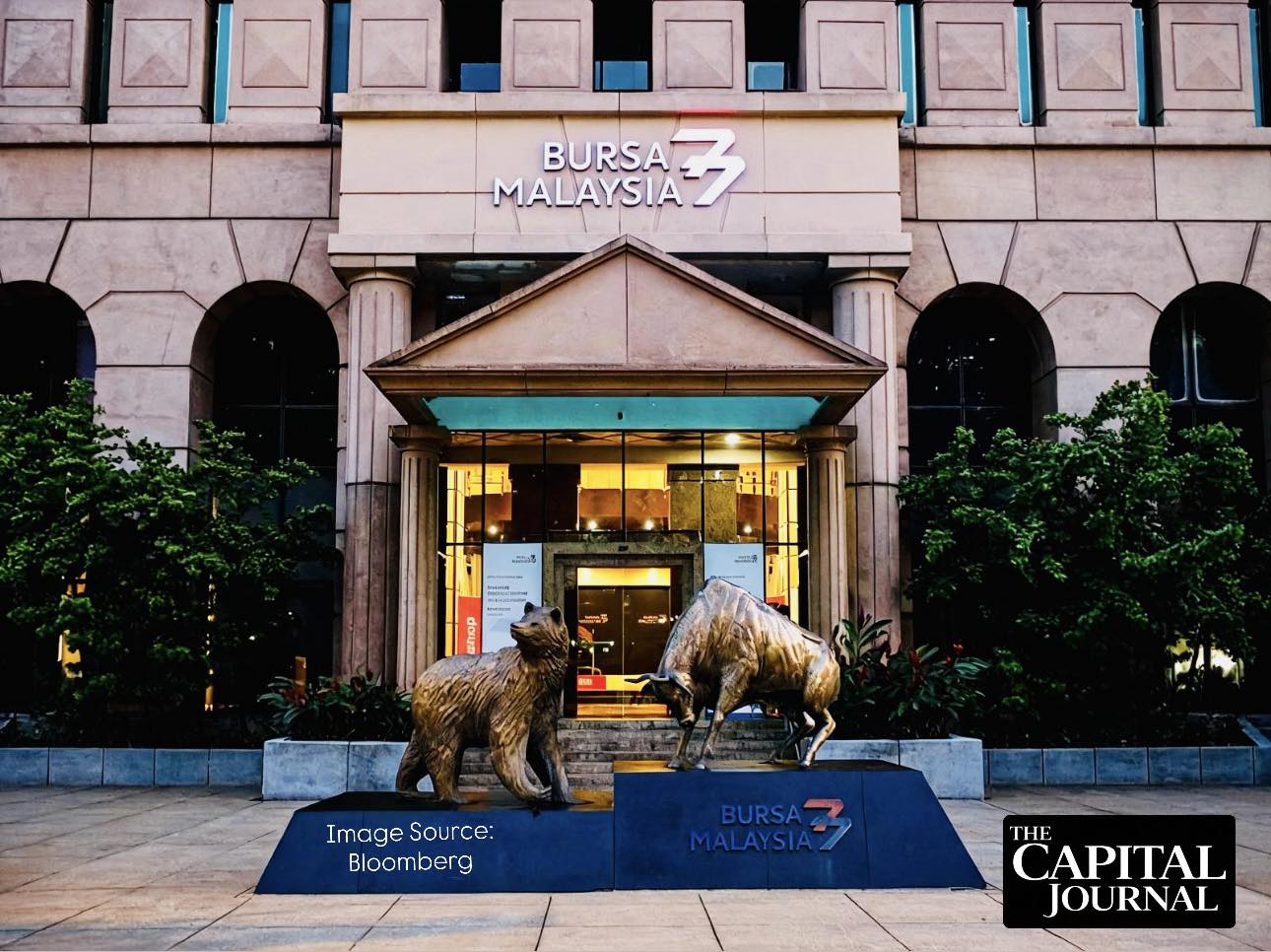
Many investors may not realise that Bursa Malaysia itself is a listed company with a market capitalisation of roughly RM7 billion. In fact, Bursa Malaysia Berhad has been listed on its own exchange since 18 March 2005.
The story of Bursa Malaysia is closely tied to the economic and political development of Malaysia itself. From a broker driven trading association to a fully commercialised exchange operator, its transformation reflects the country’s broader journey towards financial maturity, industrial expansion, and regional capital market relevance.
Deep Dive
In 1930, Singapore Stockbrokers’ Association was established as the first formal securities trading body in the region. This marked the beginning of an organised capital market ecosystem in Malaya. In 1937, the organisation was restructured and renamed Malayan Stockbrokers’ Association as regional economic influence gradually shifted.
In 1960, Malayan Stock Exchange was officially formed. At the time, Singapore and Kuala Lumpur were connected through direct telephone lines and shared a common trading system. This arrangement represented one of Southeast Asia’s earliest attempts at integrated capital market infrastructure.
In 1964, Stock Exchange of Malaysia was established. However, following Singapore’s separation from Malaysia in 1965, the exchange was renamed Stock Exchange of Malaysia and Singapore. The transition reflected a critical period of political and financial restructuring in the region.
In 1973, Malaysia and Singapore ended their currency interchange agreement, effectively severing major financial linkages between both countries. The exchange was subsequently split into Kuala Lumpur Stock Exchange Berhad and Stock Exchange of Singapore, creating two fully independent national exchanges.
In 1976, Kuala Lumpur Stock Exchange was formally incorporated as a company limited by guarantee. This legal restructuring strengthened its role as a regulated national financial institution and marked the end of the earlier informal broker dominated operating structure. The move also laid the foundation for future commercialisation.
In 1980, the exchange introduced Crude Palm Oil Futures. The product not only provided hedging tools for the domestic palm oil industry, but also helped Malaysia gradually strengthen its influence in global palm oil price discovery. In 1986, the KLSE Composite Index was launched, becoming one of the country’s most important economic indicators.
In 1989, the exchange introduced the SCORE electronic trading system, replacing the traditional open outcry method. This significantly improved trading efficiency and market accessibility. In 1990, Malaysian Central Depository was established, allowing the market to transition from physical share certificates to a centralised electronic depository system.
In 1997, the Securities Commission Malaysia Shariah Advisory Council introduced the world’s first list of Shariah compliant securities. In 1999, the Kuala Lumpur Shariah Index was launched. These initiatives positioned Malaysia as a leading global Islamic finance hub and attracted substantial Middle Eastern and Islamic institutional capital.
In 2004, Kuala Lumpur Stock Exchange completed its demutualisation exercise and was renamed Bursa Malaysia Berhad. The reform transformed the exchange from a non profit entity into a commercially driven organisation aimed at improving competitiveness and operational efficiency. On 18 March 2005, Bursa Malaysia officially listed itself on its own exchange.
In 2009, Bursa Malaysia restructured its market segments. The Main Board and Second Board were merged into the Main Market, while MESDAQ was rebranded into the ACE Market. During the same year, Chicago Mercantile Exchange acquired a 25% stake in Bursa Malaysia Derivatives through a strategic partnership that enhanced Malaysia’s global derivatives market connectivity.
In 2014, Bursa Malaysia launched the FTSE4GOOD Bursa Malaysia Index to strengthen ESG adoption within the domestic market. In 2015, the exchange signed the Sustainable Stock Exchanges voluntary commitment, formally embedding ESG principles into its regulatory framework. ESG gradually evolved from a compliance requirement into a major factor influencing international institutional investment flows.
In 2019, Bursa Malaysia reacquired the remaining 25% stake in Bursa Malaysia Derivatives from Chicago Mercantile Exchange. The move restored full ownership of the derivatives exchange and provided Bursa Malaysia with greater flexibility in product development and regional strategic positioning.
In 2024, Malaysia experienced one of its strongest IPO years in recent history. A total of 55 companies were listed, raising approximately RM7.4 billion and surpassing the original target of 42 listings. The ACE Market emerged as the most active platform for new listings. In 2025, momentum accelerated further with 60 IPOs raising around RM5.96 billion and contributing roughly RM33.14 billion in additional market capitalisation.
In 2025, Bursa Malaysia was recognised as Asia’s best exchange for climate change strategy by Asia Asset Management. During the same year, Bursa Malaysia introduced the Bursa RISE+ programme to enhance research coverage, improve liquidity, and strengthen the visibility of domestic listed companies within the broader capital market ecosystem.
Key Takeaway
The strong IPO activity over the past two years reflects a structural shift within Malaysia’s corporate financing landscape. More small and medium sized enterprises are turning towards direct capital market financing instead of relying solely on traditional bank lending. At the same time, the increasing concentration of solar related listings highlights how capital allocation is aligning closely with national policy priorities surrounding energy transition and sustainability. With the continued maturation of the ACE Market and further improvements to the LEAP Market framework, Malaysia is gradually building a more complete corporate growth ecosystem capable of supporting businesses across multiple stages of development.
FAQs
1.Why is Bursa Malaysia considered unique among stock exchanges?
Bursa Malaysia is both a national stock exchange operator and a publicly listed company trading on its own exchange since 2005.
2.What was the significance of demutualisation in 2004?
Demutualisation transformed the exchange from a non profit organisation into a commercially driven entity focused on competitiveness and efficiency.
3.Why is the Crude Palm Oil Futures market important?
It helped Malaysia strengthen its role in global palm oil pricing while providing risk management tools for producers and traders.
4. How did Malaysia become a leader in Islamic finance?
The introduction of Shariah compliant securities and Islamic market indices positioned Malaysia as a major global Islamic capital market hub.
5.What does the recent IPO surge indicate about Malaysia’s economy?
The rise in IPO activity suggests improving investor confidence, stronger entrepreneurial participation, and growing reliance on capital markets for corporate expansion.