Timeline | Description |
1971 to 1974 | Mamee is founded by Pang Chin Hin and Pang See Sew, launching Mamee noodles after early setbacks. |
1980 to 1992 | Expansion into snacks and listing on the stock exchange strengthens brand and capital base. |
2011 to 2012 | Privatisation allows strategic shift towards long term product innovation and global expansion. |
2012 onwards | Launch of premium and food service segments drives brand repositioning and diversification. |
2021 onwards | Third generation enters retail through Emart24, extending the family business into new consumption channels. |
Context
Mamee represents one of Malaysia’s most enduring consumer brands, built across three generations of the Pang family. From instant noodles to snacks and now retail, the company has consistently adapted to changing consumer behaviour.
Its longevity reflects a deeper capability. Each generation has redefined the business model in response to shifting market conditions, moving from production to branding, and ultimately towards direct consumer engagement.
Deep Dive
In 1971, Pang Chin Hin and his son Pang See Sew established Pacific Food in Melaka, entering a market dominated by foreign brands. Their initial product, Lucky Instant Noodles, struggled to gain traction, placing the business under severe financial pressure. This early failure shaped the family’s long term sensitivity to consumer behaviour and market demand.
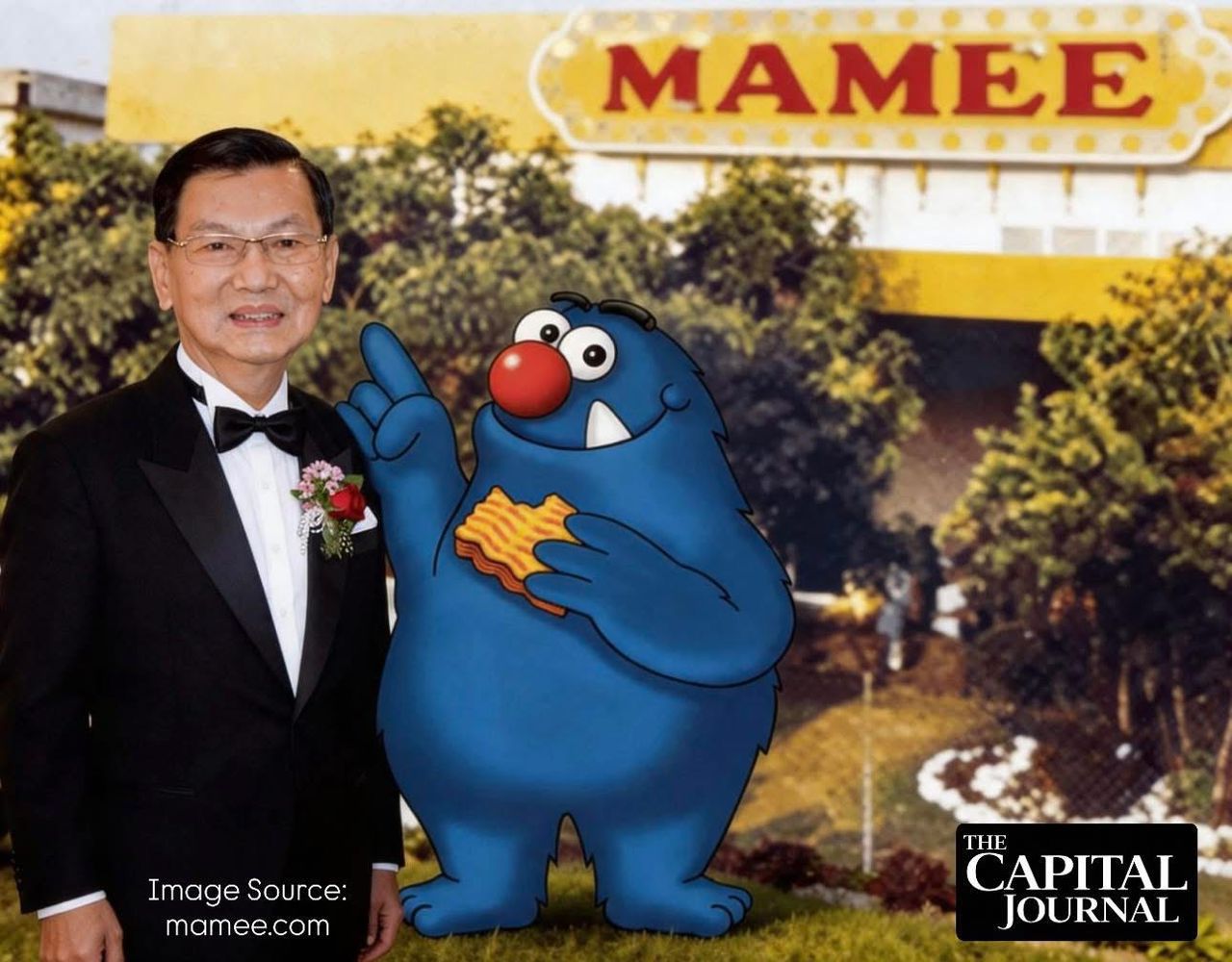
In 1974, a turning point emerged when Pang See Sew observed a rubber tapper consuming instant noodles without cooking them. This insight led to the creation of Mamee, designed specifically as a ready to eat snack. With a distinct flavour profile and strong branding, including its iconic mascot, the product quickly resonated with consumers.
In 1980, the company expanded into the snack segment with the Double Decker brand, introducing prawn crackers that complemented its core product line. This diversification strengthened its distribution network and reinforced its presence across retail channels, from small shops to supermarkets.
In 1992, the company was listed on the stock exchange, marking a milestone in its capital development. In the same year, it launched Mister Potato, entering the higher value snack segment. Over the next two decades, the company built scale and capital but faced increasing pressure from public market expectations for consistent earnings performance.
In 2011, the Pang family initiated a privatisation exercise valued at approximately RM179 million, completing the delisting in 2012. This move provided the flexibility to invest in long term innovation without the constraints of quarterly reporting. It marked a strategic pivot from short term profitability towards sustainable brand development.
In 2012, the company introduced Mamee Chef, targeting premium consumers with higher quality ingredients and improved preparation methods. At the same time, it established a food service division, securing international certifications and expanding into business to business supply for restaurants and hotels. This shift allowed the company to capture value beyond traditional retail channels.
In 2021, the third generation, represented by Vuitton Pang, extended the family business into modern retail through Emart24. By securing a master franchise agreement, the company entered the convenience store segment, focusing on ready to eat offerings aligned with changing urban lifestyles. This move represented a transition from manufacturing to direct consumer engagement.
In the present phase, Mamee’s portfolio spans snacks, instant food, beverages, and retail. Its ability to operate across consumer and business segments, while continuously refreshing its brand relevance, has enabled it to maintain resilience despite shifting market trends.
Key Takeaway
Mamee demonstrates that multi generational success depends not on preserving legacy models, but on continuously redefining how value is created and delivered to consumers.
FAQs
1. What is Mamee best known for?
It is known for its ready to eat noodle snacks and a wide range of consumer food products.
2. Why was privatisation important for the company?
It allowed the company to focus on long term innovation without pressure from public market expectations.
3. What role did the second generation play?
They expanded the brand into snacks and built a strong nationwide distribution network.
4. How is the third generation changing the business?
By entering the convenience store sector and focusing on ready to eat food consumption trends.
Why has Mamee remained relevant over decades?
Its ability to adapt to consumer behaviour and continuously evolve its business model has sustained its competitiveness.
Share this post :