
Timeline | Description |
1991 to 1994 | Kuala Lumpur Kepong Berhad enters oleochemicals, establishing KLK OLEO and its initial production base. |
2004 to 2007 | Expansion into China and Europe begins, including acquisitions that secure advanced chemical capabilities. |
2009 to 2012 | Diversification into bioenergy, green surfactants, and life sciences strengthens product depth. |
2014 to 2018 | Aggressive European acquisitions build scale and integration across specialty chemical segments. |
2020 to 2023 | Global network extends to the United States and Italy, completing a multi continent oleochemical platform. |
KLK OLEO operates quietly within the global supply chain, yet its products underpin everyday consumer goods. From personal care to food applications, its oleochemical derivatives are embedded in daily life.
As the downstream arm of Kuala Lumpur Kepong, the division represents a strategic shift away from commodity dependence towards higher margin, value added chemical production. Its growth has been driven not by visibility, but by disciplined expansion and control over critical industrial inputs.
In 1991, Kuala Lumpur Kepong initiated its move into oleochemicals, recognising that reliance on upstream plantation income exposed the group to commodity volatility. Under the leadership of Lee Oi Hian, KLK OLEO was established as a downstream platform to convert palm oil into higher value chemical derivatives. This marked the beginning of a long term transition from raw material supplier to industrial processor.
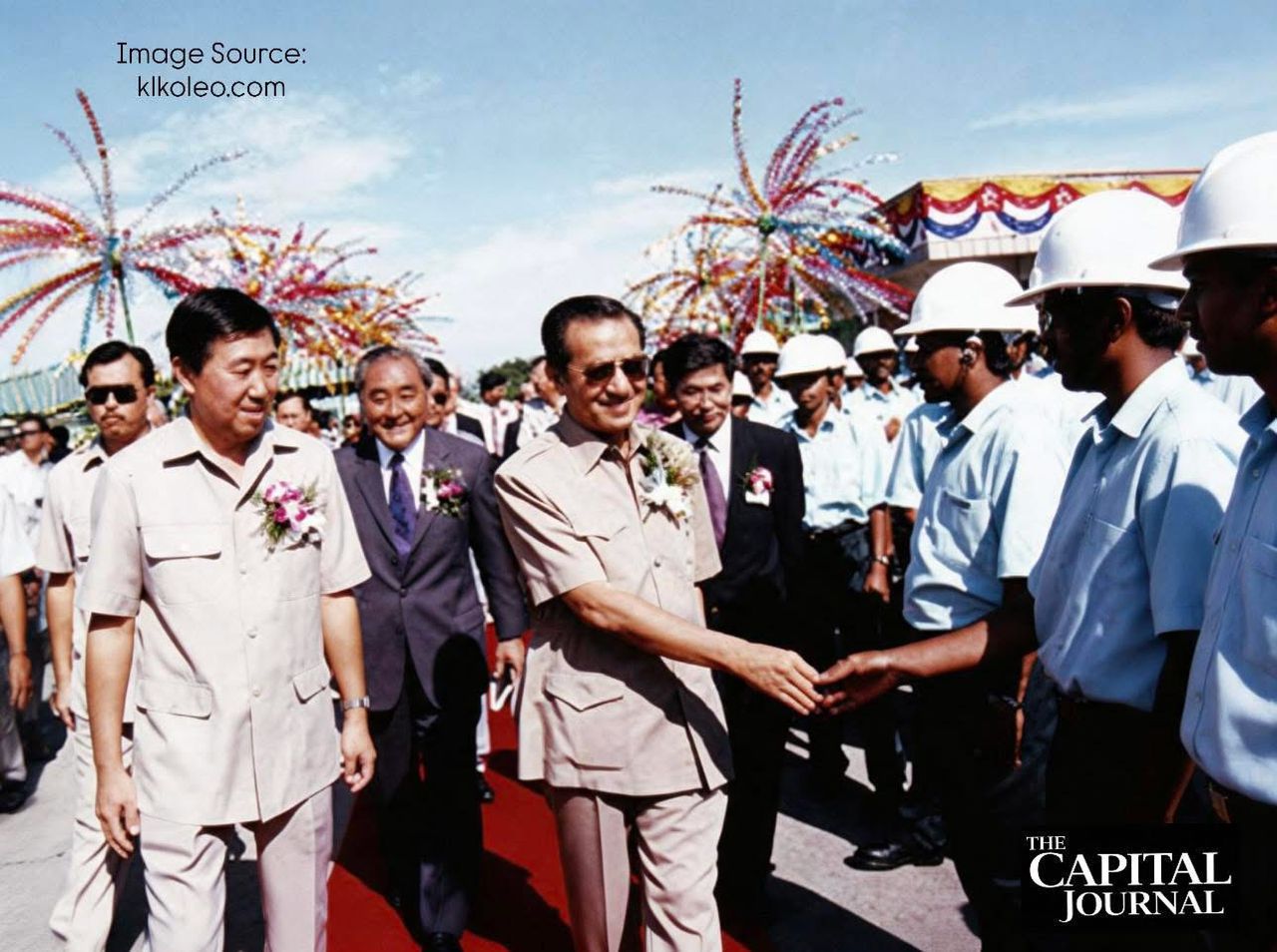
In 1994, the group strengthened its manufacturing base with the launch of PalmOleo, officially inaugurated by Mahathir Mohamad. Subsequent developments in the mid 1990s, including KSP Manufacturing and Palmamide, enabled the production of soap noodles and fatty derivatives. These early steps completed a domestic value chain from raw extraction to basic oleochemical outputs.
In 2004, KLK OLEO expanded into China with the development of Taiko Palm Oleo in Zhangjiagang. This move aligned Malaysian raw material supply with China’s growing industrial demand, forming a vertically integrated corridor between production and consumption markets. The strategy focused on scale, logistics efficiency, and proximity to end users.
In 2006, the group consolidated its identity under the KLK OLEO brand, unifying its operations globally. In the same year, it established a fatty alcohol plant in Port Klang, marking a transition towards greater technological independence. This shift reflected a move from following established processes to developing in house capabilities in higher value chemical production.
In 2007, KLK OLEO executed a dual acquisition strategy. It acquired Uniqema’s Malaysian assets, strengthening its domestic footprint, and simultaneously purchased Dr. W. Kolb Holding in Europe. This acquisition provided access to alkoxylation technology and distribution networks, enabling entry into higher margin surfactant markets.
In 2009, the group expanded into bioenergy by acquiring a biodiesel plant, reinforcing its position in renewable energy derivatives. It also introduced methyl ester sulphonate, an environmentally friendly surfactant, aligning with global sustainability trends. These developments broadened its product portfolio while positioning it within green chemistry.
In 2010, KLK OLEO acquired Croda Emmerich, extending its European manufacturing base. In 2011, it established operations in Dumai, Indonesia, improving access to raw materials and enhancing production efficiency. In 2012, the relocation and expansion of its life sciences segment strengthened its presence in plant based nutrients and speciality applications.
In 2014, the acquisition of Tensachem added sulphur based chemical capabilities, completing a critical gap in its European downstream portfolio. In 2015, further consolidation in Germany enhanced scale advantages in fatty acids and surfactants, reinforcing integration across the value chain.
In 2018, KLK OLEO advanced into high performance chemicals through the acquisition of Elementis Specialties in the Netherlands, rebranded as KLK Kolb Specialties. This marked a transition into more specialised and technically demanding product segments. Its footprint now spanned Asia and Europe, supported by integrated research and production networks.
In 2020, the group established its presence in the United States through KLK OLEO Americas, extending its market reach. In 2023, the acquisition of Temix Oleo further expanded its capabilities in lubricants, adhesives, and cosmetics. This final phase completed a global platform across three continents, linking raw materials, processing, and end market applications.
KLK OLEO demonstrates that sustained value creation in industrial sectors is driven by strategic acquisitions, vertical integration, and the ability to embed deeply within global supply chains.
1.What does KLK OLEO produce?
It produces oleochemical products derived from palm oil, including fatty acids, glycerine, surfactants, and speciality chemicals.
2.Why did Kuala Lumpur Kepong enter oleochemicals?
To reduce reliance on commodity cycles and capture higher margins through downstream processing.
3.How did KLK OLEO expand globally?
Through targeted acquisitions in Europe, China, and later the United States, combined with organic capacity expansion.
4.What is its competitive advantage?
A vertically integrated model linking plantation resources with advanced chemical manufacturing and global distribution.
5.Why is KLK OLEO considered important?
Its products are embedded in everyday consumer goods, making it a critical but often unseen player in global supply chains.
Share this post :