
Timeline | Description |
1994 to 2003 | Lee Kar Whatt built logistics expertise before founding Eco-Shop Marketing Berhad in Johor. |
2010 | Vertical integration begins with in house warehousing to reduce distribution costs. |
2019 | Investment by Creador accelerates operational scaling and governance. |
2021 to 2024 | Strategic price adjustments and private label expansion strengthen margins and revenue growth. |
2025 to 2026 | IPO and valuation surge propel founder onto Forbes Malaysia rich list. |
Eco-Shop Marketing Berhad has emerged as one of Malaysia’s fastest growing retail players, built on a simple yet disciplined pricing strategy. Its rise reflects a broader shift in consumer behaviour, where affordability and accessibility outweigh brand prestige.
The company’s growth is rooted in operational efficiency rather than product differentiation, positioning it as a resilient player in an inflation sensitive environment.
In 1994, Lee Kar Whatt began his career in construction and transportation, gaining hands on exposure to logistics and cost structures across Malaysia’s secondary towns. This experience shaped his understanding that sustainable margins are built not on pricing power, but on cost discipline at every operational layer.
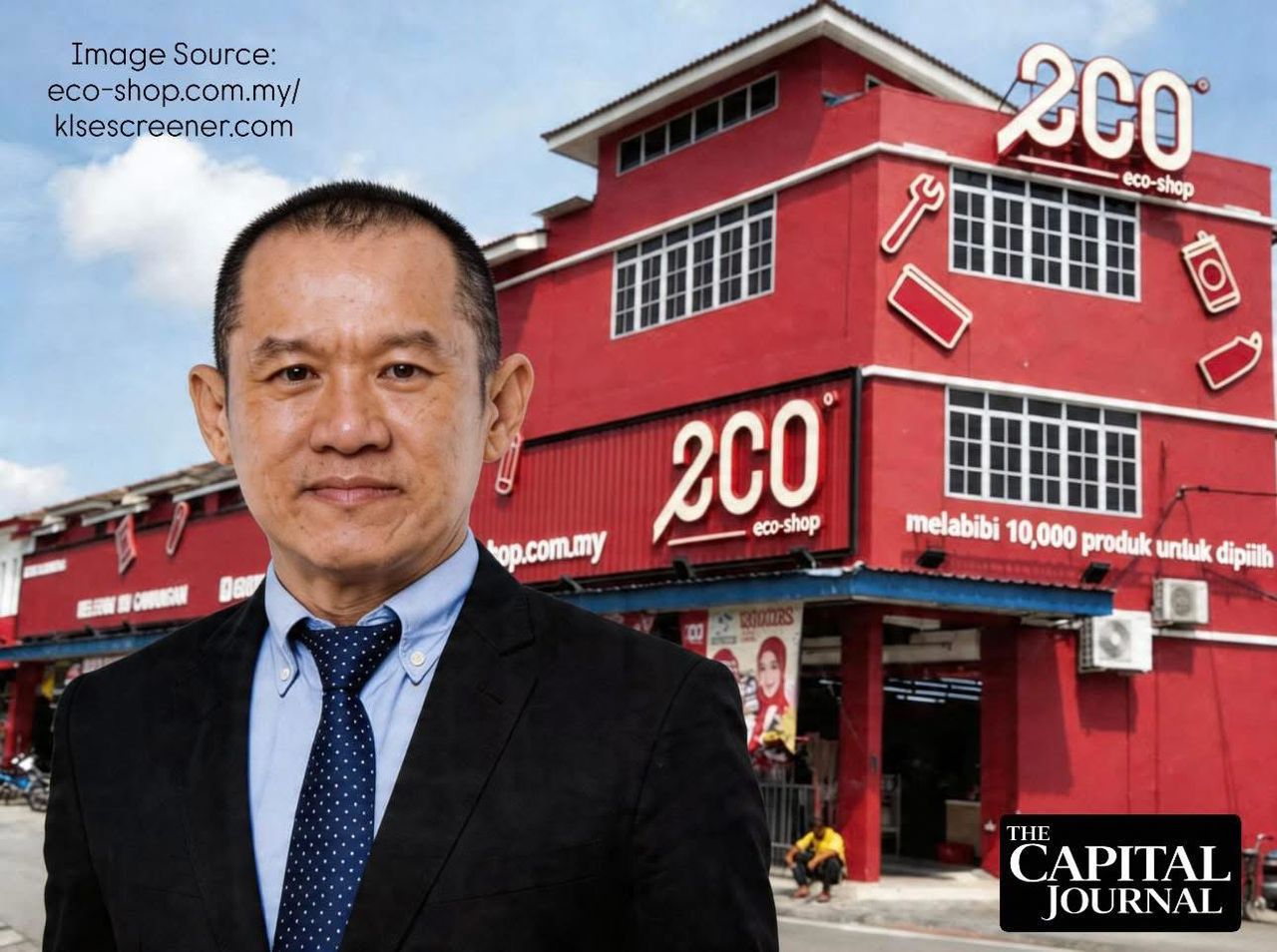
In 2003, he founded Eco-Shop in Gemas, Johor, introducing a fixed price retail concept centred on affordability. The store initially priced items at RM2.10, targeting mass market consumers in smaller towns. While perceived as a low end offering, the model relied on high inventory turnover and strict cost control to remain viable.
In 2010, the company took a decisive step towards vertical integration by establishing its own warehouse in Jementah. This reduced reliance on third party logistics and enabled tighter control over distribution costs. By eliminating intermediaries, Eco-Shop achieved one of the lowest cost structures in the sector, reinforcing its competitive advantage.
In 2019, private equity firm Creador acquired a minority stake in the company. Led by Brahmal Vasudevan, the firm brought operational expertise developed through earlier investments such as Mr. D.I.Y. Group. This partnership enhanced governance, inventory management, and scalability, positioning Eco-Shop for accelerated growth.
In 2021, amid rising inflation and operational costs, Eco-Shop adjusted its pricing from RM2.20 to RM2.40. This measured increase preserved affordability while providing margin stability during a period of economic uncertainty. The company continued expanding its store network without compromising its core value proposition.
In 2024, Eco-Shop reported revenue exceeding RM2.4 billion, supported by a strong portfolio of private label brands. These included categories such as stationery, household goods, and food products. Private labels accounted for over half of total revenue and delivered higher margins compared to third party brands, reinforcing profitability through direct sourcing and manufacturing partnerships.
In 2025, the company was listed on Bursa Malaysia, raising approximately RM400 million through the issuance of new shares. The IPO marked a significant milestone, with market capitalisation surpassing RM7.5 billion. During the same period, product pricing was adjusted to RM2.60, reflecting ongoing cost pressures while maintaining its core positioning.
In 2026, Lee Kar Whatt entered the Forbes Malaysia rich list with an estimated net worth of USD1.5 billion. His rise followed a similar trajectory to Lee Thiam Wah of 99 Speedmart, highlighting the increasing prominence of value retail models within Malaysia’s wealth landscape.
Eco-Shop Marketing demonstrates that in uncertain economic environments, disciplined cost control, vertical integration, and high turnover retail models can create scalable and resilient business empires.
1.What is Eco-Shop’s business model?
It operates fixed price retail stores focused on affordability and high inventory turnover.
2.Why is vertical integration important to Eco-Shop?
It reduces reliance on intermediaries and lowers distribution costs, improving margins.
3.What role did Creador play?
It provided capital and operational expertise to scale the business efficiently.
4.How does Eco-Shop maintain profitability at low prices?
Through private label products and strict cost control across the supply chain.
5.Why is Eco-Shop significant in Malaysia’s retail sector?
It represents a successful model of value driven retail that thrives in inflationary conditions.
Share this post :