Timeline | Description |
1903 | Wong Ah Fook founded the first Chinese owned bank in Singapore to serve underserved Chinese merchants, establishing an early credit system. |
1913 | Cheong Yoke Choy established Kwong Yik Bank in Kuala Lumpur, marking the birth of Malaysia first Chinese owned bank. |
1917 | Cheong supported the expansion of Tung Shin Hospital and founded Pak Peng Free School, linking finance with community development. |
1968 | Malayan Banking Berhad acquired a 30% stake in Kwong Yik Bank, initiating its transition into a larger banking group. |
1970 | Maybank increased its stake to 51.15%, gaining control while retaining the Kwong Yik brand for market positioning. |
1996 | Abdul Rashid Hussain acquired a 75% stake in Kwong Yik Bank at a premium valuation from Maybank. |
1997 | Kwong Yik Bank merged with DCB Bank to form RHB Bank, marking the end of its standalone identity. |
Context
Long before modern banking names became dominant, Kwong Yik Bank stood as the foundation of Chinese financial enterprise in Malaya. Established in an era when foreign banks controlled credit, it created a parallel financial system that enabled Chinese merchants to access capital, build businesses and sustain community institutions.
Deep Dive
In 1903, Wong Ah Fook founded the first Chinese owned bank in Singapore. At a time when European banks largely excluded Chinese merchants, he introduced a model centred on trust based lending and collateral backed financing. Although the bank ceased operations in 1913 due to management weaknesses, it marked one of the earliest attempts at financial independence among Chinese communities in Southeast Asia.
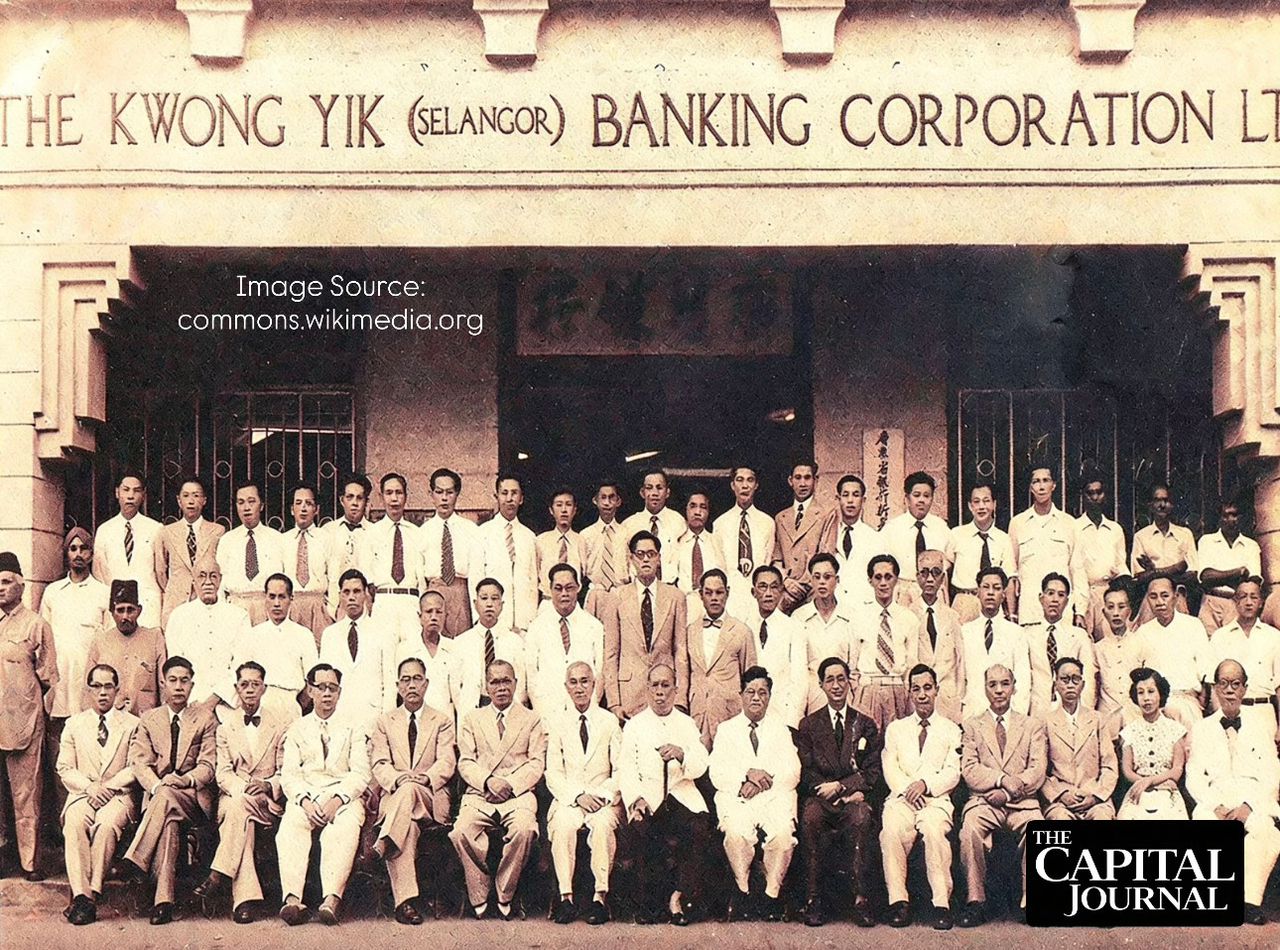
In 1913, Cheong Yoke Choy carried forward this vision by establishing Kwong Yik Bank in Kuala Lumpur. Drawing on his wealth from tin mining, he recognised that control over deposits and lending was critical to sustaining Chinese commercial networks. The bank quickly became a key financial intermediary for local businesses.
In 1917, Cheong expanded his role beyond finance into community leadership. He supported the development of Tung Shin Hospital, addressing the lack of accessible healthcare among Chinese migrants. In the same year, he founded Pak Peng Free School, funding its operations through rental income from his theatre assets. These initiatives reflected a broader philosophy where capital accumulation was closely tied to social responsibility.
From 1917 to 1968, Kwong Yik Bank evolved into a symbol of Chinese economic resilience. It provided savings and credit facilities that underpinned small and medium enterprises, while maintaining close ties with community institutions. Over several decades, it stood as both a financial and social pillar within Malaya Chinese society.
In 1968, Malayan Banking Berhad acquired a 30% stake in Kwong Yik Bank. This marked the beginning of a structural shift as local independent banks were gradually integrated into larger national institutions. The move provided capital support while signalling a transition away from purely community owned banking.
In 1970, Maybank increased its stake to 51.15%, securing control over Kwong Yik Bank. Although the brand name was retained, the bank effectively became part of a broader national banking strategy, leveraging its strong position within the Chinese business community.
In the early 1990s, Abdul Rashid Hussain emerged as a key figure in Malaysia financial sector. Through Rashid Hussain Berhad, he expanded aggressively by acquiring banking licences and consolidating financial institutions, positioning himself for large scale industry restructuring.
In 1996, a major turning point occurred when Abdul Rashid Hussain acquired a 75% stake in Kwong Yik Bank from Maybank for RM2.16 billion, representing a significant premium to its book value. The transaction reflected both the strategic importance of banking licences and the intensifying consolidation within the sector.
In 1997, Kwong Yik Bank was merged with DCB Bank to form RHB Bank. This consolidation, one of the largest in Malaysia banking history at the time, effectively ended the independent existence of Kwong Yik Bank after 84 years. The integration was later expanded with additional acquisitions, further reshaping the national banking landscape.
Key Takeaway
Kwong Yik Bank represented more than a financial institution. It was the starting point of structured Chinese banking in Malaya, bridging capital access gaps left by foreign institutions. Its eventual absorption into larger banking groups reflects a broader shift from community based finance to consolidated national systems. While its name no longer exists, its role in shaping Malaysia financial foundations remains enduring.
FAQs
1. Why is Kwong Yik Bank considered significant?
It was the first Chinese owned bank in Malaya and pioneered financial access for Chinese merchants.
2. Who founded Kwong Yik Bank?
It was established by Cheong Yoke Choy, a prominent tin mining entrepreneur.
3. What role did the bank play in society?
It supported both commercial financing and community initiatives such as healthcare and education.
4. Why did Kwong Yik Bank lose its independence?
It was gradually absorbed through equity acquisitions and industry consolidation led by larger banking groups.
5. What replaced Kwong Yik Bank?
It became part of RHB Bank following its merger with DCB Bank in 1997.