Timeline | Description |
1994 | Carrefour entered Malaysia via Magnificent Diagraph, introducing the hypermarket model in Subang Jaya. |
1996 | AEON Credit Service was established, embedding a retail plus finance strategy alongside retail expansion. |
2002 | Tesco partnered with Sime Darby, leveraging land assets for rapid store expansion. |
2005 | Carrefour faced intensified competition from Giant backed by Jardine Matheson logistics and scale advantages. |
2008 | Carrefour imposed higher supplier fees and extended payment cycles, straining relationships with local vendors. |
2010 | Financial pressure from Europe debt crisis led Carrefour to seek divestment of its Malaysian operations. |
2012 | AEON Co Ltd acquired Carrefour Malaysia, rebranding it as AEON BiG. |
Context
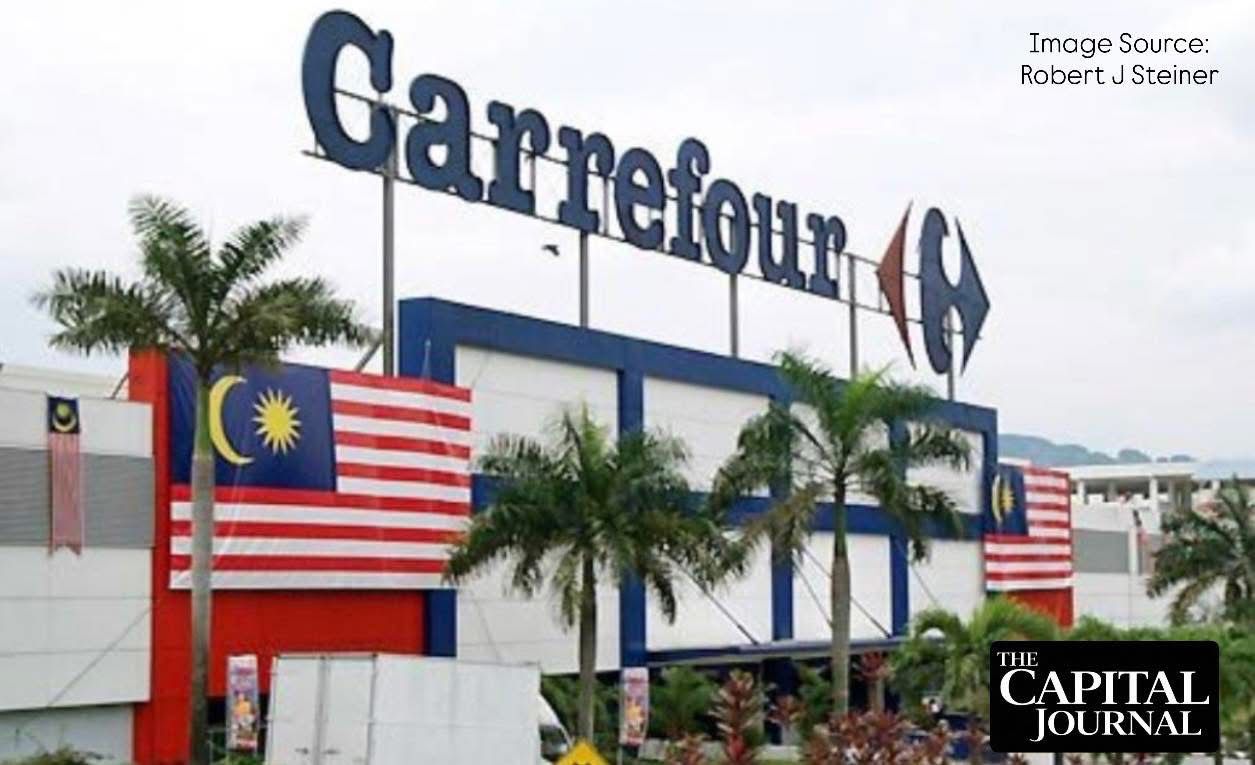
Carrefour’s entry into Malaysia marked the arrival of the hypermarket era, reshaping how consumers approached everyday shopping. Its one stop retail concept disrupted traditional trade formats and set new expectations for scale and convenience. However, over time, structural disadvantages and strategic limitations weakened its position against more integrated competitors.
Deep Dive
In 1994, Carrefour entered Malaysia through its local operating entity, introducing the hypermarket concept in Subang Jaya. The format combined groceries, household goods and general merchandise under one roof, offering price competitiveness through bulk procurement. This approach quickly attracted urban consumers and disrupted traditional retail channels.
In 1996, while Carrefour expanded its physical footprint, AEON Credit Service was established in Malaysia. This move reflected a broader strategy by AEON Co Ltd to integrate retail operations with financial services. By offering instalment payment options and credit products, AEON positioned its retail outlets as channels for long term customer monetisation rather than purely transactional spaces.
In 2002, Tesco entered into a joint venture with Sime Darby. This partnership enabled Tesco to leverage extensive landbank resources, allowing it to develop strategically located stores with greater cost control. In contrast, Carrefour reliance on leased properties limited its flexibility and exposed it to higher operating costs.
In 2005, competition intensified as Giant expanded aggressively under the ownership of Jardine Matheson through its subsidiary Dairy Farm. With integrated supply chains and logistics infrastructure, Giant achieved lower distribution costs, further eroding Carrefour competitive positioning.
In 2008, Carrefour implemented measures to improve cash flow, including increasing listing fees for suppliers and extending payment terms beyond 90 days. These practices strained relationships with local vendors and weakened its supply chain resilience. At the same time, competitors such as AEON strengthened their ecosystem by linking retail traffic to financial products, generating recurring income streams.
In 2010, the European sovereign debt crisis placed pressure on Carrefour global operations, prompting a strategic review of non core markets. Malaysia, where competitive pressures had intensified and asset ownership was limited, became a candidate for divestment.
In 2012, AEON Co Ltd acquired Carrefour Malaysia for approximately RM590 million. Following the acquisition, the stores were rebranded as AEON BiG. The integration strategy maintained distinct brand positioning, with AEON focusing on lifestyle oriented retail while AEON BiG retained the hypermarket format centred on value and volume.
Key Takeaway
Carrefour experience in Malaysia highlights the limitations of a pure retail model in an increasingly complex ecosystem. While its early success was driven by scale and pricing, competitors built multi dimensional advantages through land ownership, supply chain integration and financial services. In such an environment, reliance on product margins alone proved insufficient to sustain long term competitiveness.
FAQs
1. What did Carrefour introduce to Malaysia retail market?
It introduced the hypermarket concept, offering a wide range of goods in a single location.
2. Why did Carrefour struggle against competitors?
It lacked advantages in land ownership, supply chain integration and financial services.
3. How did AEON differ from Carrefour?
AEON combined retail with financial services, generating additional revenue streams beyond product sales.
4. Why did Carrefour exit Malaysia?
Global financial pressures and local competitive disadvantages led to its divestment.
5. What happened after Carrefour was acquired?
Its stores were rebranded as AEON BiG and integrated into AEON broader retail ecosystem.