Timeline | Description |
1968 | Low Brothers proposed a fully air conditioned shopping complex along Jalan Ampang, introducing a new retail concept. |
1973 | Ampang Park Shopping Centre officially opened as Malaysia first modern shopping mall with escalators and curated retail tenants. |
1980 | Ampang Park reached its peak as a lifestyle and cultural hub, attracting affluent shoppers and specialty retailers. |
2015 | Mass Rapid Transit Corporation announced land acquisition for the MRT Putrajaya Line interchange project. |
2017 | The Federal Court approved compulsory land acquisition, ending legal challenges by shop owners. |
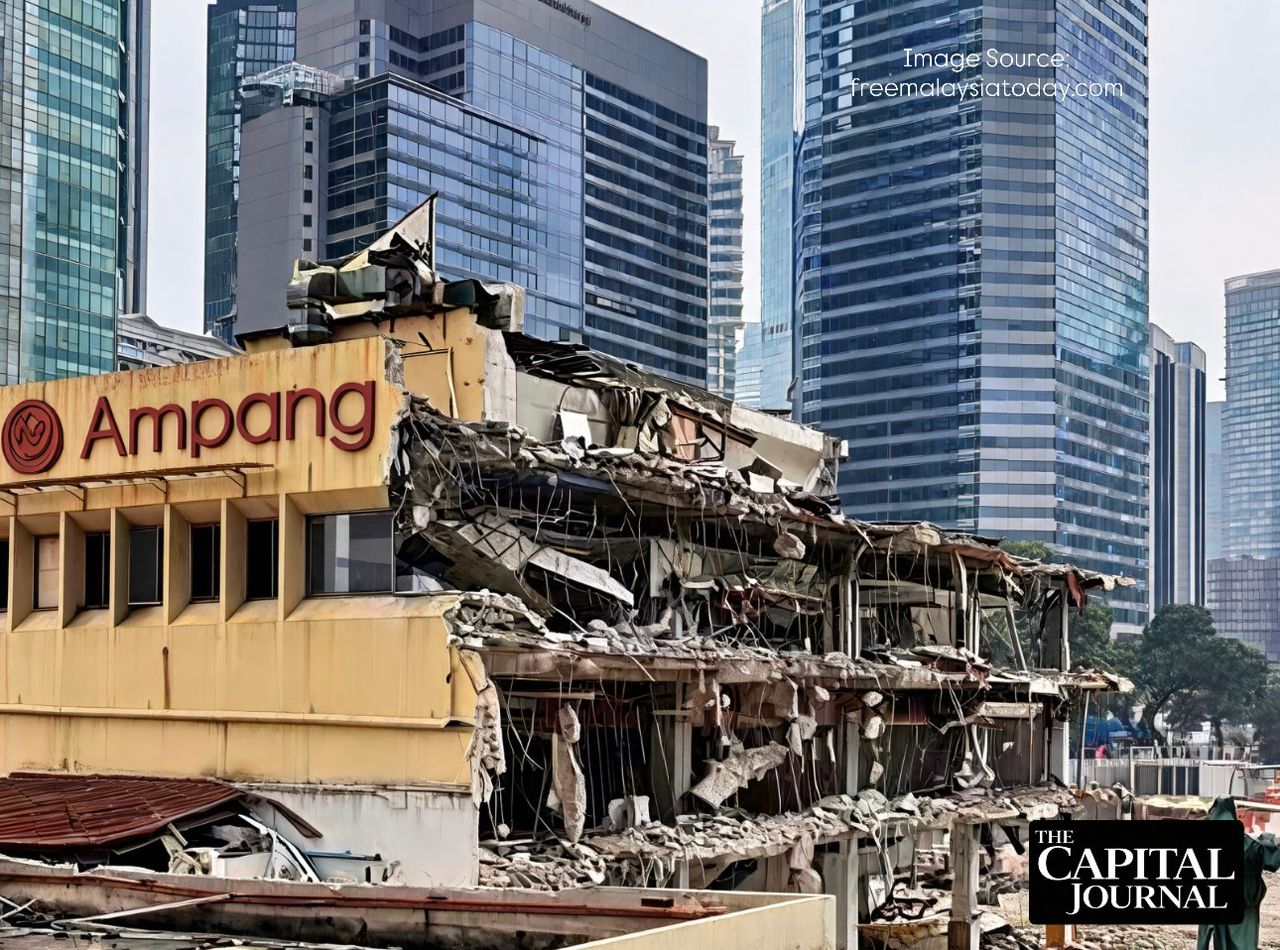
2018 | Ampang Park was demolished to make way for underground rail infrastructure. |
2023 | MRT Putrajaya Line opened with Ampang Park station, replacing the former mall site. |
Context
Ampang Park Shopping Centre marked the beginning of modern retail in Malaysia. Built at a time when traditional markets dominated, it introduced an entirely new way of shopping. For decades, it stood as both a commercial hub and cultural landmark. Its eventual demolition reflects the tension between heritage and the demands of urban infrastructure.
Deep Dive
In 1968, the Low Brothers envisioned a fully air conditioned shopping complex along Jalan Ampang. At the time, retail activity was largely confined to open markets and shophouses. The concept of a climate controlled mall integrating retail and leisure was unprecedented in Malaysia.
In 1973, Ampang Park Shopping Centre officially opened. Located at the intersection of Jalan Ampang and Jalan Tun Razak, the four storey complex featured Malaysia first escalator, attracting visitors from across the country. Its tenant mix included tailors, jewellers and photography studios, setting a new standard for organised retail.
From 1980 to 1989, Ampang Park entered its peak years. It became a focal point for fashion and culture, particularly among urban consumers seeking customised garments and lifestyle goods. Retail outlets such as music stores contributed to its reputation as a cultural landmark during this period.
From 1990 to 2000, the emergence of larger, centrally managed shopping malls began to shift consumer preferences. Unlike newer developments, Ampang Park operated under a strata ownership model, with individual shop units owned by multiple parties. While this structure facilitated initial development, it limited the ability to implement coordinated upgrades or strategic repositioning.
In 2015, Mass Rapid Transit Corporation announced plans to acquire the site for the construction of an interchange station linking major rail lines. The project required extensive underground works that could not be accommodated within the existing building structure.
In 2016, a group of shop owners initiated legal action to challenge the acquisition. However, differing interests among stakeholders weakened collective resistance. The fragmented ownership structure made it difficult to present a unified position against the compulsory acquisition.
In 2017, the Federal Court ruled in favour of the government, affirming that the acquisition served public interest. This decision effectively sealed the fate of Ampang Park Shopping Centre, marking the end of its operational life after more than four decades.
In 2018, demolition works commenced, and the structure was removed within months. The site was transformed into a major construction zone to support the development of underground rail infrastructure.
In 2023, the MRT Putrajaya Line commenced operations, with Ampang Park station serving as a key interchange. Above ground, the former mall site was redeveloped into a public space, replacing a once prominent commercial landmark with a transit oriented urban environment.
Key Takeaway
Ampang Park legacy lies in its role as a pioneer of modern retail in Malaysia. However, its eventual disappearance highlights the limitations of fragmented ownership in adapting to large scale urban transformation. As cities evolve, assets that cannot be restructured or repositioned risk being replaced by infrastructure that better serves broader economic needs.
FAQs
1. Why is Ampang Park historically important?
It was Malaysia’s first modern shopping mall and introduced air conditioned retail spaces.
2. What made Ampang Park unique compared to newer malls?
It operated under a strata ownership model rather than a single developer controlled structure.
3. Why was Ampang Park demolished?
It was acquired for the construction of a major MRT interchange station.
4. Could the mall have been preserved?
Technical constraints and infrastructure requirements made preservation impractical.
5. What replaced Ampang Park?
The site now houses the Ampang Park MRT station and surrounding public space.