
Timeline | Description |
1982 | Ong Leong Huat acquired a near insolvent stockbroking firm, marking OSK’s entry into capital markets. |
1985 | The Pan-Electric Crisis tested the firm’s resilience, which it survived through disciplined risk management. |
1991 | OSK was listed on Bursa Malaysia, enabling regional expansion across Asian markets. |
2007 | The group transformed into OSK Investment Bank following regulatory reforms in investment banking. |
2012 | OSK sold its investment banking business to RHB Capital and became a major shareholder in RHB Bank. |
2017 to 2024 | The RHB stake evolved into a core earnings pillar, generating stable dividend income and supporting asset growth. |
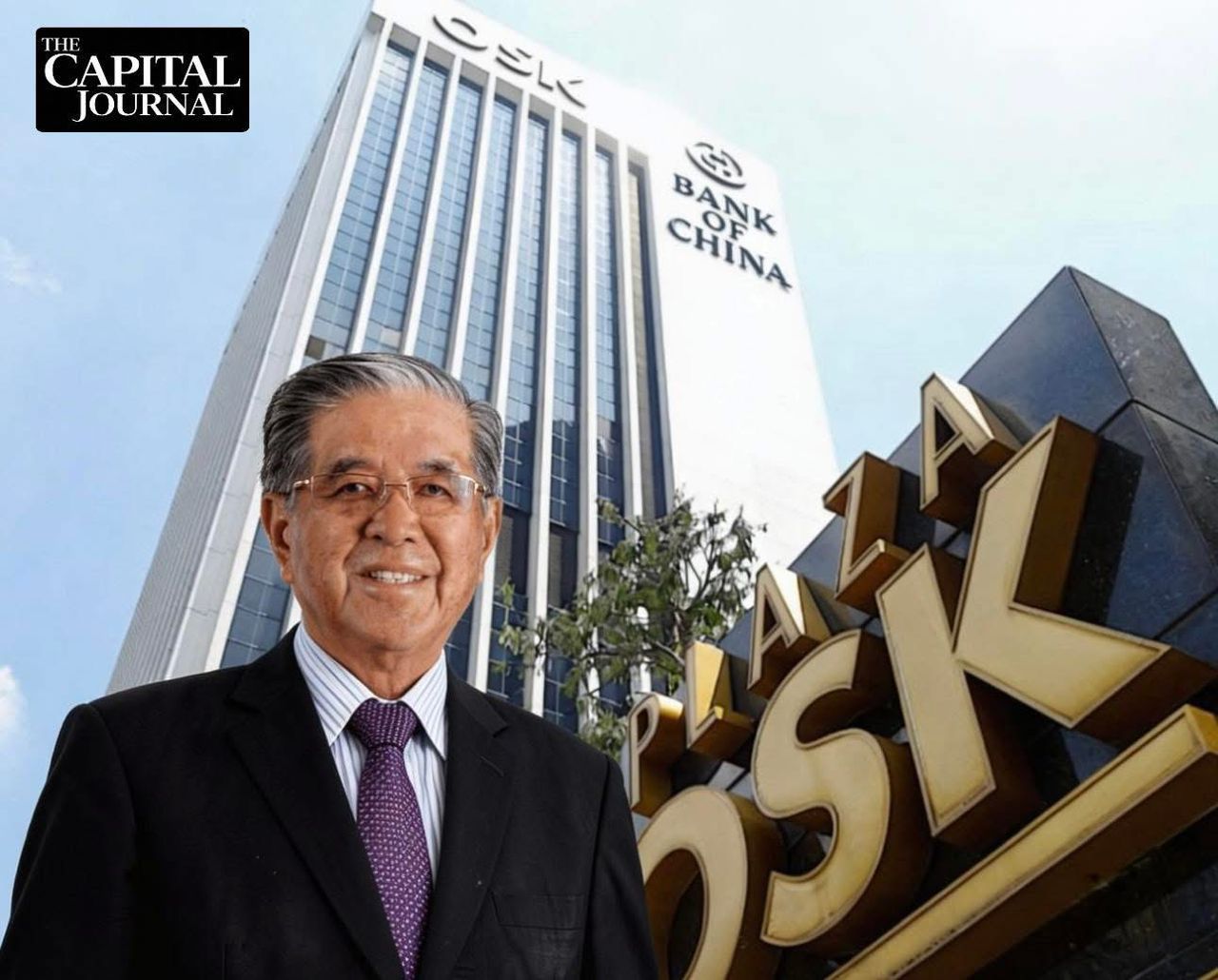
OSK Holdings Berhad is often associated with property development, yet its strategic importance lies in its position as a major private shareholder in RHB Bank Berhad. The group’s evolution reflects a shift from operating a cyclical financial business to holding strategic equity in a large banking institution, prioritising stability and recurring income over direct operational exposure.
In 1982, Tan Sri Ong Leong Huat acquired a near insolvent stockbroking firm with approximately RM2 million in capital. This marked OSK’s entry into a volatile financial sector at a time when Malaysia’s capital markets were still developing.
In 1985, the Pan-Electric Crisis triggered a major regional market disruption, leading to exchange closures in Malaysia and Singapore. OSK survived the crisis due to disciplined credit practices and conservative risk management, setting the foundation for future growth.
From 1986 to 1991, OSK rebuilt and expanded its operations, culminating in its listing on Bursa Malaysia in 1991. This provided access to capital and supported its transition into a regional brokerage platform.
From 1992 to 2000, OSK expanded across Asia, establishing a presence in Singapore, Hong Kong, Indonesia, Thailand, Cambodia, and China. The group positioned itself as a regional capital markets intermediary.
In 2000, OSK played a key role in the listing of Supermax Corporation Berhad, strengthening its reputation within Malaysia’s equity capital markets and enhancing its position in the mid cap segment.
In 2007, regulatory reforms led by Bank Negara Malaysia prompted OSK to transform into OSK Investment Bank. The group expanded into advisory, corporate finance, and institutional services, operating as a full service investment bank at its peak.
In 2012, OSK executed a strategic pivot by disposing of its investment banking business to RHB Capital Berhad for approximately RM1.99 billion. The transaction included both equity in RHB and cash, marking a shift from operations to strategic ownership.
From 2013 to 2016, following restructuring within RHB, OSK’s stake was translated into a direct shareholding in RHB Bank Berhad. This repositioning transformed its earnings profile into one driven by recurring dividend income rather than volatile market activity.
In 2015, OSK expanded into income generating assets through the redevelopment of Atria Shopping Gallery and consolidated its property and industrial businesses under OSK Holdings Berhad. This strengthened its position as a diversified holding company.
From 2017 to 2024, OSK’s stake in RHB Bank Berhad became a core earnings pillar. Its approximately 10.13% shareholding generated consistent dividend income, supporting expansion in property markets and contributing to net asset value growth exceeding RM6 billion.
OSK Holdings Berhad illustrates a disciplined capital allocation strategy focused on long term value creation. By exiting a cyclical investment banking business and repositioning as a strategic shareholder in RHB Bank Berhad, the group shifted towards stability and recurring income. This approach highlights the advantage of transitioning from operator to capital owner in achieving sustainable financial performance.
1.What is OSK Holdings known for today?
It is a diversified holding company and a major private shareholder in RHB Bank Berhad.
2.How did OSK survive the Pan-Electric Crisis?
Through strict credit management and conservative risk controls.
3.Why did OSK sell its investment banking business?
To exit a cyclical sector and convert value into equity ownership with stable returns.
4.What did OSK gain from the RHB deal?
A significant stake in RHB Bank Berhad and recurring dividend income.
5.What defines OSK’s strategy today?
A focus on capital preservation, recurring income, and diversified asset ownership.
Share this post :