
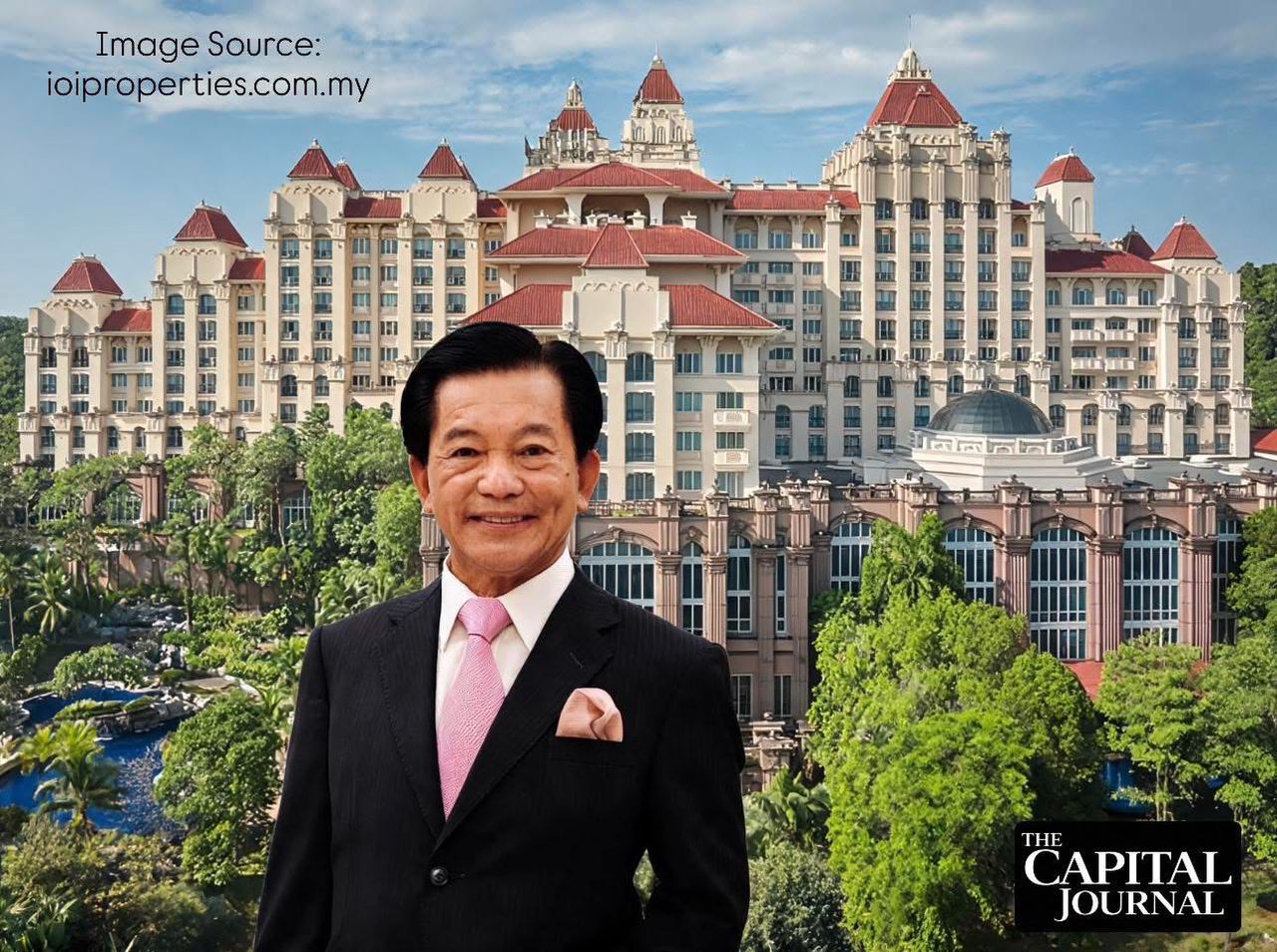
Timeline | Description |
1939 | Lee Shin Cheng is born in Selangor, with early hardship shaping his resilience and land instincts. |
1975 | Lam Soon Huat Development was founded, marking his entry into property development. |
1984 | Acquisition of Bukit Kelang Development, Rapat Jaya, and Eng Hup Industries strengthens market position. |
1990 | Bandar Puchong Jaya development begins, signalling a bold move into undervalued land. |
1999 | Bandar Puteri Puchong is launched, redefining integrated township development in Klang Valley. |
2014 | IOI Properties Group is spun off and relisted, raising RM1.87 billion in one of Malaysia’s largest IPOs. |
2024 | IOI Rio City is launched as a 100 acre integrated development based on the 15 minute city concept. |
2026 | IOI Properties advances towards FBM KLCI inclusion following a strong share price surge and REIT listing. |
IOI Properties Group has entered a decisive phase in its corporate trajectory following a sharp 87.8% surge in its share price since November 2025. The rally has lifted its market capitalization ranking to 24th among eligible Malaysian listed companies, placing it firmly within the threshold required for inclusion into the FBM KLCI.
Under index rules, companies ranked within the top 25 qualify for consideration. Based on the scheduled review on 25 May 2026, the group is widely expected to replace Sime Darby and secure its position among Malaysia’s 30 benchmark blue chip constituents by 22 June.
This milestone reflects not merely a short term valuation shift, but the culmination of decades of disciplined land banking, township execution, and capital recycling.
In 1939, Lee Shin Cheng was born in Selangor into a modest family. Economic hardship forced him to leave school at the age of 11. He spent several years selling ice cream within plantation estates, developing early resilience and a practical understanding of land.
In 1956, after completing his secondary education, he entered the plantation sector as a junior supervisor. Through consistent performance, he rose rapidly and became an estate manager before the age of 30, building operational discipline that later shaped his business approach.
In 1975, he founded Lam Soon Huat Development, marking his formal entry into property development. The business expanded in 1984 through the acquisition of Bukit Kelang Development, Rapat Jaya, and Eng Hup Industries, strengthening its land bank and market presence.
In 1990, he initiated the Bandar Puchong Jaya project spanning more than 930 acres. At the time, Puchong was largely overlooked, characterised by ex mining land and rubber estates. The investment reflected a forward view on urban expansion and infrastructure driven demand.
In 1999, Bandar Puteri Puchong was launched, integrating residential zones with structured commercial centres. The project redefined suburban development in the Klang Valley and established the group’s capability in large-scale township execution.
In 2014, IOI Properties Group was spun off and re-listed as an independent entity. The IPO raised RM1.87 billion, enabling clearer separation between plantation and property operations and allowing sharper capital allocation.
In 2024, the group launched IOI Rio City, a 100 acre integrated development within Bandar Puteri. Built around a 15 minute city concept, it integrates residential, commercial, healthcare, and innovation components, with IOI Mall Rio positioned as a key retail catalyst.
In April 2026, the group executed a major capital recycling exercise through the listing of IOIPG REIT. Approximately RM7.58 billion worth of core assets were securitised, including six flagship hotels and prime office buildings in Putrajaya, strengthening balance sheet flexibility and unlocking asset value.
IOI Properties Group’s progression towards blue chip status reflects a long term strategy anchored in land foresight, disciplined execution, and consistent capital monetisation rather than reliance on short term market cycles.
1.Why is IOI Properties Group eligible for FBM KLCI inclusion?
Its market capitalisation ranking has risen into the top 25, meeting the index eligibility requirement.
2.What drove the recent share price surge?
Investor confidence improved following strong execution, asset monetisation, and clearer earnings visibility.
3.What is the purpose of the IOIPG REIT listing?
It unlocks capital from mature assets while maintaining recurring income streams.
4.Why was the 2014 IPO significant?
It separated plantation and property businesses, improving strategic focus and valuation clarity.
5.What underpins the group’s long term growth?
Its strength lies in land banking, integrated township development, and sustained execution capability.
Share this post :