Timeline | Description |
1957 | Lim Foo Yong initiated the development of the first Merlin Hotel in Kuala Lumpur to mark Malaya independence. |
1963 | Merlin Hotels was established and listed in 1964, positioning itself as a luxury hospitality brand in Southeast Asia. |
1972 | Merlin merged with Faber Union to form Faber Merlin, gaining access to strategic land for large scale development. |
1973 | The global stock market downturn triggered financial distress, leading to asset disposals including the Singapore Merlin Hotel. |
1984 | Chan Sek Keong gained control through Multi-Purpose Holdings Berhad before the Pan Electric crisis disrupted the group. |
1991 | Faber exited the hotel business, selling its flagship Kuala Lumpur property and shifting focus away from hospitality. |
2000 | YTL Corporation acquired and redeveloped remaining Merlin assets into boutique hospitality offerings. |
2015 | Faber rebranded as UEM Edgenta, completing its transformation into an infrastructure services group. |
Context
Merlin Hotels once stood at the centre of Malaysia luxury hospitality landscape. Built during a period of post independence optimism, it represented prestige, access and international ambition. Its properties hosted political leaders, business elites and global travellers. Yet, over time, ownership changes and financial pressures reshaped its trajectory, ultimately dissolving one of the region most recognisable hotel brands.
Deep Dive
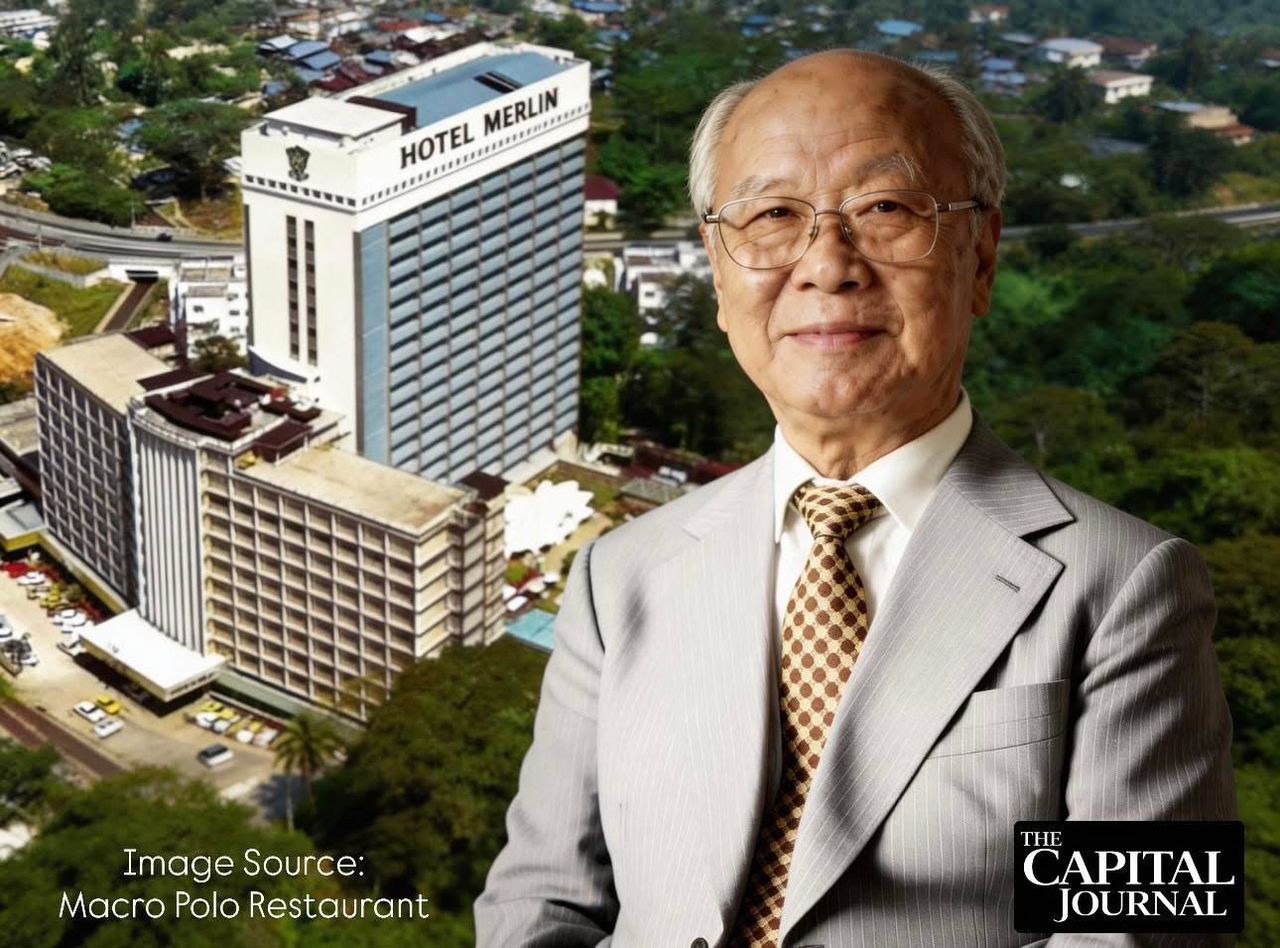
In 1957, Lim Foo Yong embarked on building the first Merlin Hotel in Kuala Lumpur to commemorate Malaya independence. Completed in 1959, the hotel quickly became one of the most prominent landmarks in the capital, serving as a hub for high level business engagements and social gatherings.
In 1963, Merlin Hotels was formally established as a holding entity and subsequently listed in 1964. The listing provided access to capital markets, enabling the group to expand its footprint and position itself as a leading luxury hospitality brand in Southeast Asia.
From 1971 to 1972, Lim faced structural limitations inherent in the hotel industry, particularly its capital intensive nature and dependence on prime land. To overcome this, he entered into a merger with Faber Union, a company linked to a prominent business family with substantial land holdings. The merged entity, Faber Merlin, gained control of approximately 260 acres of land in Kuala Lumpur, which became the foundation for the Taman Desa development.
In 1973, the global stock market downturn exposed financial vulnerabilities within the group leadership. Leveraged positions taken in Singapore led to liquidity pressures, forcing the disposal of key assets. Among them was the Singapore Merlin Hotel, which was eventually acquired by United Overseas Bank through its property arm United Overseas Land and later repositioned under a new brand.
From 1980 to 1985, continued capital requirements from property development led to further asset divestments. The Hong Kong Merlin Hotel, located in a prime district, was sold to The Kadoorie Family, owners of Peninsula Hotels. The site was redeveloped into The Kowloon Hotel, marking the loss of another flagship asset.
In 1983, Chan Sek Keong entered the corporate structure via Multi-Purpose Holdings Berhad, gradually accumulating control. By 1984, he had secured a dominant position and aimed to leverage the group asset base for further expansion.
In 1985, the Pan Electric crisis disrupted regional financial markets and led to the downfall of key corporate figures involved in leveraged trading. The fallout triggered financial instability within Faber Merlin, pushing the group into restructuring and eventual control shifts.
From 1991 to 1993, the new leadership deprioritised hospitality operations in favour of sectors aligned with infrastructure and development policies. The flagship Merlin Hotel in Kuala Lumpur was sold and rebranded as Concorde Hotel Kuala Lumpur, effectively ending the brand presence in its original home market.
In the early 2000s, residual assets associated with the Merlin brand were gradually redeveloped. YTL Corporation acquired a former Merlin property in Cameron Highlands and transformed it into Cameron Highlands Resort, repositioning it as a boutique luxury destination with a distinct colonial theme.
In 2015, Faber completed its corporate transformation by merging with Opus Group and Propel, rebranding as UEM Edgenta. This marked its full transition into an asset management and infrastructure services group, with no remaining ties to its hospitality origins.
Key Takeaway
The Merlin story underscores how ownership and control shape corporate destiny. While the brand began as a symbol of ambition and luxury, successive shifts in control redirected its strategic priorities. Over time, assets were repurposed, brands were replaced and the original vision faded. Yet, its legacy persists through the physical spaces and institutions that evolved from its foundation.
FAQs
1. Who founded Merlin Hotels?
It was founded by Lim Foo Yong, a Malaysian entrepreneur who developed its first flagship hotel in Kuala Lumpur.
2. Why did Merlin merge with Faber Union?
The merger provided access to strategic land resources necessary for expansion in a capital intensive industry.
3. What caused the decline of Merlin Hotels?
Financial pressures, leveraged exposure and ownership changes led to asset disposals and strategic shifts.
4. What happened to the original Kuala Lumpur Merlin Hotel?
It was sold and rebranded as Concorde Hotel Kuala Lumpur after the group exited the hospitality sector.
5. Does the Merlin brand still exist today?
No, the brand has been fully phased out following corporate restructuring and asset transformation.