
Timeline | Description |
1983 | Landmarks Holdings Berhad acquired Sungei Wang Plaza and adjacent land in Bukit Bintang. |
1989 | Regent Kuala Lumpur was developed and ownership transferred to City Developments Limited under Kwek Leng Beng. |
2007 | The hotel was rebranded as Grand Millennium Kuala Lumpur after a major refurbishment. |
2008 | CapitaLand acquired a controlling stake in Sungei Wang Plaza, reshaping Bukit Bintang ownership. |
2011 | Adjacent land was sold at a premium and later developed into Pavilion Elite. |
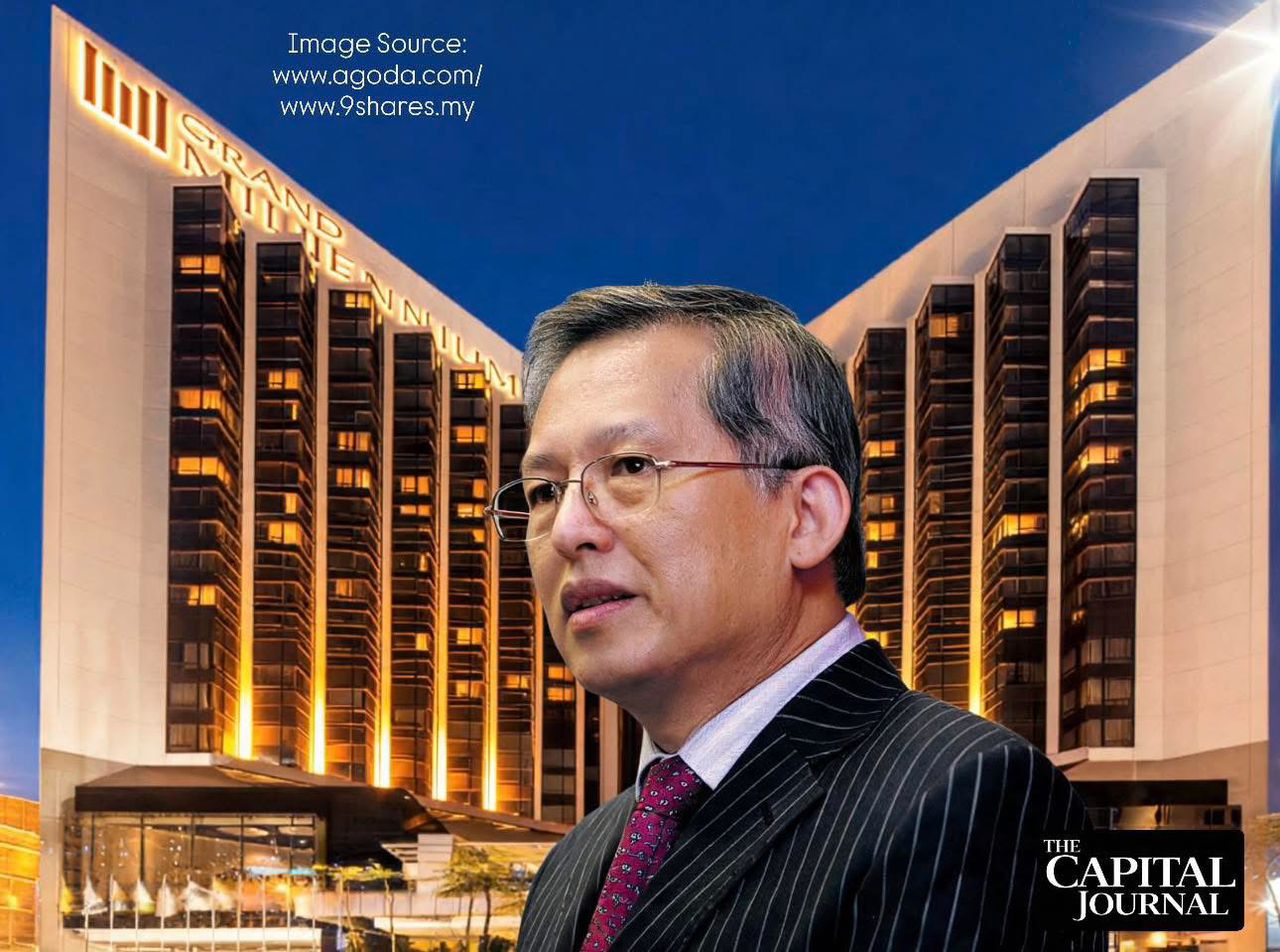
Located along Jalan Bukit Bintang, Grand Millennium Kuala Lumpur stands as one of the most strategically positioned five star hotels in the city. Adjacent to Pavilion Suites and within walking distance to Pavilion Kuala Lumpur and Fahrenheit88, the 468 room property commands a prime frontage in Kuala Lumpur’s busiest retail corridor.
The hotel features floor to ceiling window rooms overlooking the city skyline, alongside established dining outlets such as Lai Ching Yuen and Bistro 160. In 2025, it hosted delegates during the 46th ASEAN Summit, reinforcing its status as a key hospitality asset in Malaysia’s capital.
Beyond its hospitality function, the property represents a multi decade capital story shaped by shifting ownership structures, cross border investments, and long term land control strategies.
In 1983, Landmarks Holdings Berhad, the predecessor of Landmarks Berhad, acquired Sungei Wang Plaza Sdn Bhd, gaining control of one of Malaysia’s most profitable retail complexes at the time. Crucially, the deal included a parcel of adjacent land, laying the foundation for future landmark developments in Bukit Bintang.
In 1989, this adjacent land was developed into Regent Kuala Lumpur. While Landmarks held the asset initially, ownership had effectively shifted to City Developments Limited, controlled by Kwek Leng Beng, through its hotel arm CDL Hotels International. The property became part of a broader regional hospitality portfolio, with the Regent brand operating under a management arrangement. Its distinctive triangular glass façade and panoramic bubble lift quickly established it as a benchmark in Malaysia’s hotel industry.
In 1993, CDL Hotels Malaysia Sdn Bhd was incorporated to formalise the group’s ownership structure in Malaysia. At this stage, Regent Kuala Lumpur and Sungei Wang Plaza formed a tightly integrated commercial hub in Bukit Bintang, supported by Landmarks’ operational control of the retail component and its backing by government linked Peremba.
In 2006, Genting Berhad, led by Lim Kok Thay, acquired a 16.65 percent stake in Landmarks Berhad via Phoenix Spectrum Sdn Bhd for RM160 million. The move was aimed at gaining indirect exposure to the Treasure Bay project in Bintan Island, Indonesia, as Genting sought growth beyond its core highland resort operations.
In 2007, following a refurbishment costing nearly RM100 million, the hotel was rebranded as Grand Millennium Kuala Lumpur. Despite the change in branding, ownership of the land and asset had remained under City Developments Limited since 1989. The rebranding marked the full operational transition to Millennium and Copthorne Hotels, consolidating the Kwek family’s control and removing the legacy Regent branding structure.
In 2008, CapitaLand acquired approximately 61.9 percent of Sungei Wang Plaza for RM595 million, including the majority of retail units and parking facilities. This transaction dismantled the earlier Landmarks linked asset structure and triggered a repricing of Bukit Bintang’s core commercial real estate.
In 2011, Kwek Leng Beng capitalised on rising land values by selling a parcel of land adjacent to the hotel for RM210 million. The site was subsequently developed into Pavilion Elite, further intensifying the commercial density of the area.
The evolution of Grand Millennium Kuala Lumpur underscores that long term control of prime land, rather than branding or operations, is the defining factor in sustaining value within Southeast Asia’s most competitive urban real estate markets.
1.Who owns Grand Millennium Kuala Lumpur?
The hotel is owned by City Developments Limited, controlled by Singapore businessman Kwek Leng Beng.
2.Was the hotel always called Grand Millennium?
No, it was originally developed as Regent Kuala Lumpur before being rebranded in 2007.
3.Why is Bukit Bintang strategically important?
It is Kuala Lumpur’s main retail and tourism corridor, with high foot traffic and premium land value.
4.What happened to Sungei Wang Plaza ownership?
CapitaLand acquired a majority stake in 2008, reshaping the area’s ownership landscape.
5.What is the significance of the Pavilion Elite site?
It represents a high value land monetisation by the Kwek family, reflecting strong timing in capital recycling.
Share this post :