
Timeline | Description |
1957 | Loy Hean Heong acquired rubber estates at low cost following British plantation exits and resold them at five times the price, forming his initial capital base. |
1963 | Loy established Island Hotels and Properties in Penang and listed the company, expanding beyond land transactions. |
1974 | Acquisition of Malaysian Borneo Finance Corporation marked a strategic shift into financial services, setting the foundation for rapid expansion. |
1987 | MBf introduced credit card services under MBf Holdings, pioneering reward points and expanding consumer finance adoption in Malaysia. |
1993 | MBf Finance built an integrated financial ecosystem spanning loans, credit cards and unit trusts, strengthening group cash flow. |
1997 | Loy passed away during the Asian financial crisis, exposing structural weaknesses as non performing loans surged sharply. |
1999 | Bank Negara Malaysia took over MBf Finance after its capital adequacy fell below regulatory requirements. |
2001 | Arab-Malaysian Finance acquired MBf Finance assets under a government led consolidation exercise. |
2012 | AmBank Group acquired MBf Cards, marking the final exit of the Loy family from the financial sector. |
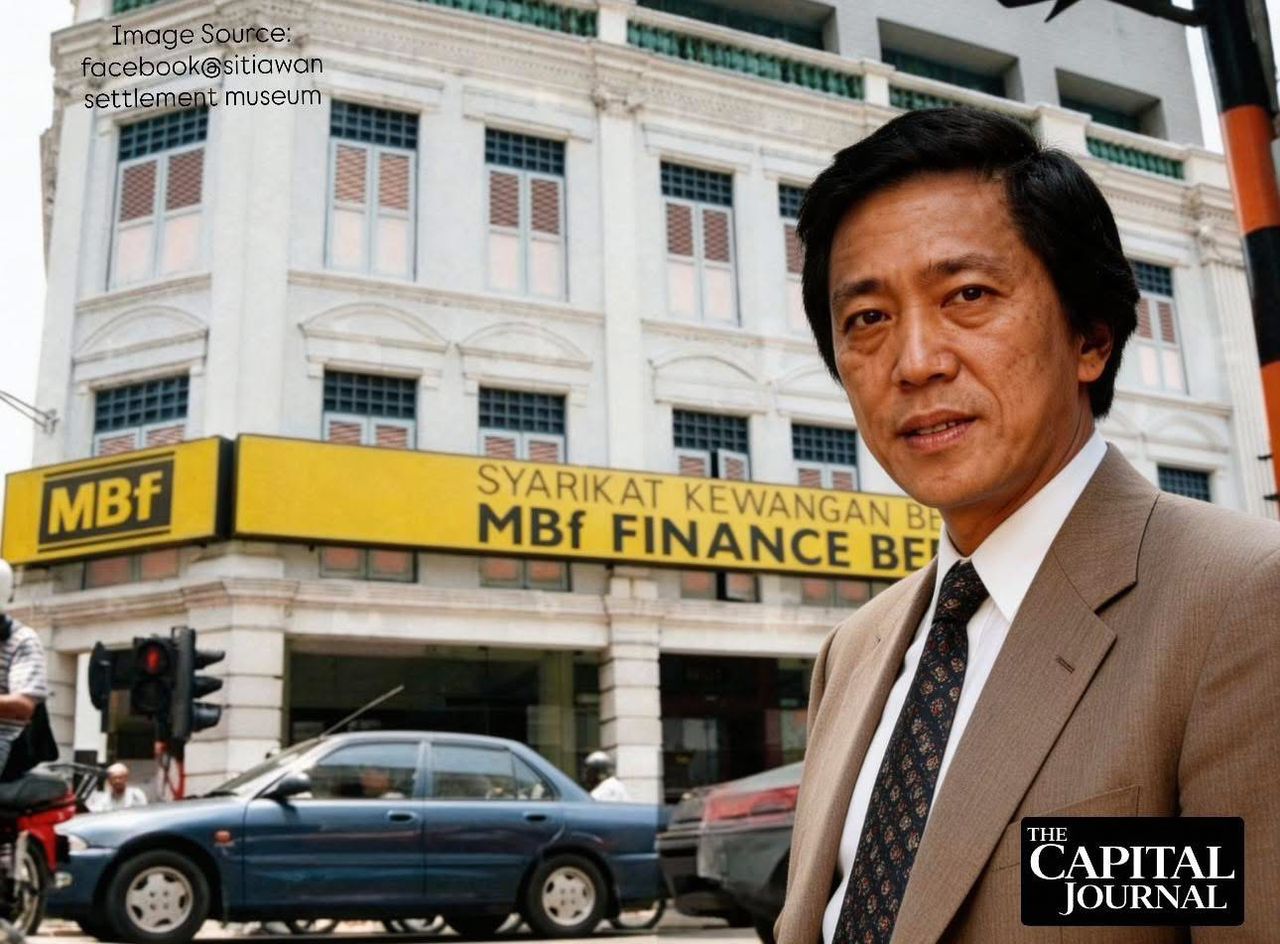
In the early days of Malaysia consumer finance, few names carried as much weight as MBf. At a time when credit cards were still unfamiliar to most households, MBf introduced structured consumer lending and reward based spending. Its rapid ascent mirrored the aggressive expansion of Malaysia financial sector, while its collapse revealed the cost of unchecked leverage.
In 1957, following Malaya’s independence, British plantation owners began exiting the country. Tan Sri Loy Hean Heong seized the opportunity by acquiring rubber estates at approximately MYR100 per acre before subdividing and reselling them at MYR500 per acre, generating a fivefold return that formed his initial capital base.
In 1963, Loy established Island Hotels and Properties in Penang, expanding beyond land transactions into hospitality and real estate. The company was subsequently listed, providing him with access to public capital and strengthening his financial position.
In 1974, Loy made a decisive move by acquiring Malaysian Borneo Finance Corporation, later known as MBf Finance. This marked his entry into the financial services sector, where he began building a non bank lending institution with aggressive growth strategies.
From 1974 to 1985, MBf Finance expanded rapidly across Malaysia, offering hire purchase financing, personal loans, and property related credit. Loy’s expansion driven approach earned him recognition as a leading entrepreneur and established MBf as the country’s largest non bank financial institution.
In 1987, MBf launched its credit card business under MBf Cards, partnering with Mastercard to pioneer card based payments in Malaysia. The Context of reward points and collaborations with BonusLink reshaped consumer spending habits, making credit cards a mainstream financial tool.
In 1987, one of the most significant strategic decisions was to place MBf Cards under MBf Holdings rather than MBf Finance. This structural separation would later prove critical in preserving value during the group’s financial distress.
In 1993, MBf Finance had built a comprehensive financial ecosystem spanning auto loans, personal credit, and housing finance. Customers borrowed from MBf, spent via MBf Cards, and channelled savings into affiliated funds, creating a tightly integrated cash flow cycle that supported expansion into property and education.
In 1997, the Asian Financial Crisis triggered a sharp downturn in Malaysia’s economy. The collapse of the property market and rising unemployment led to a surge in non performing loans, particularly in auto financing and unsecured personal credit.
In 1997, the death of Tan Sri Loy Hean Heong due to cancer removed the central leadership figure of the group. Without his direction, the organisation struggled to manage the escalating financial stress.
In 1999, Bank Negara Malaysia intervened and took control of MBf Finance under the Banking and Financial Institutions Act 1989. Although the institution remained solvent, its risk weighted capital ratio had fallen below the regulatory threshold of 8%, necessitating immediate action.
In 2001, as part of a broader consolidation of Malaysia’s banking sector, Arab Malaysian Finance, now part of AmBank Group, acquired the assets and liabilities of MBf Finance. The transaction included branches, deposits, and core lending operations.
In 2001, MBf Holdings retained ownership of MBf Cards due to its earlier structural separation from the banking entity. This preserved a valuable asset that continued to operate independently within the group.
In 2012, MBf Holdings agreed to sell MBf Cards M Sdn Bhd to AmBank Group for MYR623 million in cash. This marked the final exit of the Loy family from Malaysia’s financial industry after more than three decades.
MBf Finance played a pivotal role in shaping Malaysia’s consumer finance landscape. It introduced credit accessibility to a broader population and normalised card based spending at a time when such concepts were still emerging.
However, its rapid expansion was underpinned by increasing leverage and concentration in higher risk lending segments. As economic conditions deteriorated, these vulnerabilities became systemic threats rather than manageable risks.
The separation of MBf Cards from MBf Finance remains one of the most notable strategic decisions in the group’s history. It demonstrated foresight in corporate structuring, allowing part of the business to retain value even as the core financial entity collapsed.
MBf Finance’s trajectory reflects the dual nature of financial innovation and risk. While it accelerated the adoption of consumer credit in Malaysia, its aggressive expansion and reliance on leverage ultimately undermined its stability. The episode underscores the importance of balancing growth with disciplined risk management in financial institutions.
1.What made MBf Finance significant in Malaysia?
It was the largest non bank financial institution and a pioneer in consumer credit and card based payments.
2.Why did MBf Finance collapse?
The Asian Financial Crisis led to a surge in non performing loans and weakened its capital position.
3.What was unique about MBf Cards?
It introduced reward programmes and was structurally separated from MBf Finance, preserving its value.
4.What role did Bank Negara Malaysia play?
It took control of MBf Finance in 1999 to stabilise the financial system.
5. How did the MBf story end?
The final asset, MBf Cards, was sold to AmBank in 2012, marking the family’s exit from finance.
Share this post :